

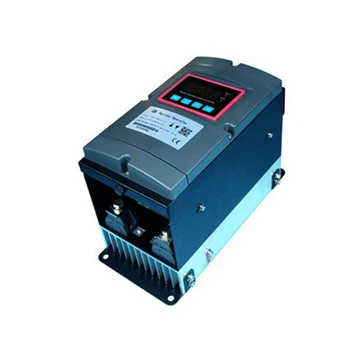
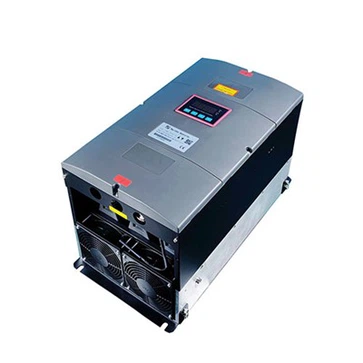
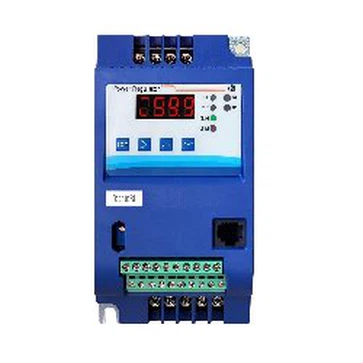
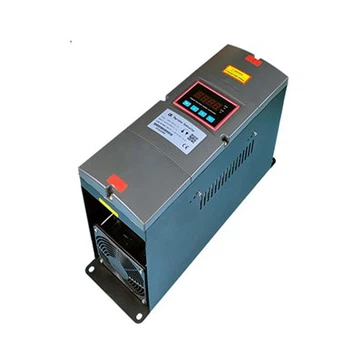
The thyristor industrial heating power regulator (also known as thyristor power adjuster or SCR power adjuster) is a core control device for industrial heating with thyristors as the core switching element. It achieves stepless power regulation through two core control methods: phase-shift triggering and zero-crossing triggering, and is suitable for various industrial heating loads. It is an energy-saving control tool in the field of industrial electric heating.
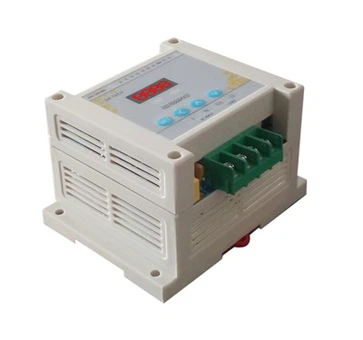
Core working mode
Phase-shift triggering
Delay the thyristor's activation within each half-cycle of the AC power supply, and adjust the effective value of the output voltage by changing the size of the conduction Angle. The smaller the conduction Angle, the lower the output voltage and power. This method can achieve continuous and smooth power regulation, with a fast response speed. It is suitable for scenarios such as resistance furnaces and quenching furnaces that have high requirements for the continuity of heating power. However, it may cause electromagnetic interference and usually needs to be used in conjunction with a filter.
Zero-crossing trigger
At the zero-crossing point of the AC voltage, the thyristor is triggered to conduct and turn off, outputting a complete sine wave. It regulates the average power by controlling the number of cycles conducting per unit time, such as conducting 5 cycles and turning off 5 cycles per second to achieve a 50% power output. This method has almost no electromagnetic interference and can prevent current surges from damaging the heating elements. It is suitable for scenarios sensitive to interference, such as laboratory ovens and constant temperature baths in semiconductor processes.
Outstanding advantages
Precise temperature control and energy saving
Equipped with a PID closed-loop control algorithm, the temperature control accuracy can reach ±0.5%-±1%, which can stably maintain the constant temperature required for industrial heating. Compared with the "fully on and fully off" control mode of traditional relays, it can match power output as needed, avoiding energy waste caused by excessive heating. After application in some industrial scenarios, the power-saving rate can be significantly improved. It supports three feedback modes simultaneously: constant voltage, constant current and constant power. Even if the power supply voltage fluctuates by ±10% or the load impedance changes by 10 times, the heating parameters can still be kept stable.
Strong adaptability and stability
Compatible with conventional industrial voltages such as 220V and 380V, some models can be customized for special voltages like 660V, and can be compatible with various heating load types including resistive, inductive loads and the primary side of transformers. It has no mechanical contacts, is resistant to frequent switching, and has a service life far exceeding that of traditional mechanical switches. At the same time, it has a soft start function, which can reduce the impact on the power grid during startup and ensure the stable operation of the heating system.
Integrated protection and easy interconnection
Mainstream models generally have multiple built-in protection functions such as overcurrent, phase loss, phase sequence, and thyristor overheating. Some also feature heat sink over-temperature detection and slow shutdown protection designs, which can promptly avoid the risk of equipment failure. In addition, it is compatible with industrial standard control signals such as 4-20mA and 0-10V, and can be seamlessly integrated with PLCS, temperature control instruments and other devices. It also supports one instrument controlling multiple trigger boards, meeting the centralized management and control requirements of industrial automated heating systems.
Typical application scenarios
This type of regulator is widely used in multiple industrial heating related fields.
In the metallurgical industry, it can be used for temperature control in salt bath furnaces, power frequency induction furnaces, and heat treatment furnaces, ensuring the temperature stability of metal annealing, quenching and other processes.
In the glass and ceramic industries, it is compatible with equipment such as glass melting furnaces and tunnel electric kilns, precisely controlling the heating temperature for the formation of molten glass and the sintering of ceramics.
In the field of chemical engineering, it can adjust the heating power of systems such as distillation evaporation and pipeline heating to prevent temperature fluctuations from affecting the effect of chemical reactions.
In addition, it can also be used in scenarios such as heating the injection molding machine barrel, temperature control of vacuum coating equipment, and heating of kilns in powder metallurgy machinery.
Precautions for Use
Emphasize heat dissipation
Thyristors generate significant heat during high-power operation. Models with a current of ≥50A should be equipped with heat sinks, cooling fans, or even water cooling systems to ensure that the temperature of the heat dissipation substrate does not exceed 80℃, preventing component damage due to overheating.
Load adaptation and interference suppression
For inductive loads such as heating equipment with transformers, an RC absorption circuit needs to be installed to suppress turn-off overvoltage. Capacitive loads may require a series inductor for current limiting. If the phase-shifting triggering method is adopted, it is prone to harmonic interference with the power grid. In such cases, an input filter can be added for optimization.
Reserve power margin
When selecting the model, a margin of about 1.5 times the current capacity should be reserved to avoid equipment overload caused by a sudden increase in heating load. At the same time, choose single-phase or three-phase models based on the total power of the heating system to ensure power matching.