

What is the resolution of the display on a Furnace Carbon Potential Controller?
As a provider of Furnace Carbon Potential Controller, I often receive inquiries from customers about various technical specifications of our products. One question that frequently comes up is about the resolution of the display on a Furnace Carbon Potential Controller. In this blog post, I will delve into this topic to provide a comprehensive understanding.
Understanding Display Resolution
Display resolution refers to the number of distinct pixels that can be displayed in each dimension on a screen. In the context of a Furnace Carbon Potential Controller, a higher resolution means that the display can show more detailed and accurate information. For example, a controller with a high - resolution display can present carbon potential values with greater precision, allowing operators to make more informed decisions.
When it comes to furnace control, the carbon potential is a critical parameter. It affects the quality of the heat - treated products, such as the hardness, toughness, and wear resistance of metals. A controller with a high - resolution display can show small changes in carbon potential, which is crucial for maintaining the desired properties of the treated materials.
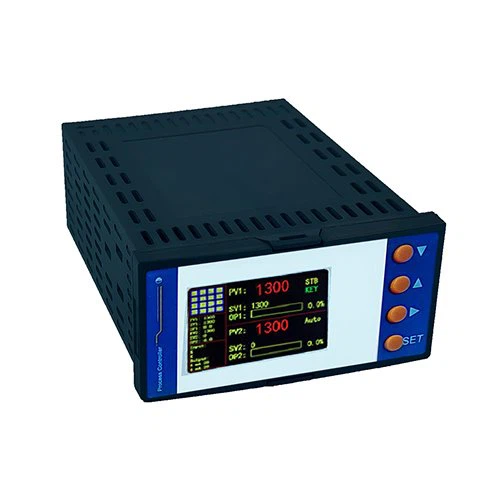

Importance of High Resolution in Furnace Carbon Potential Controllers
- Accurate Monitoring: High - resolution displays enable operators to monitor the carbon potential in real - time with high precision. Even small fluctuations in carbon potential can have a significant impact on the quality of the heat - treated products. For instance, in the automotive industry, where high - quality metal components are required, a small deviation in carbon potential can lead to parts that do not meet the strict quality standards. A controller with a high - resolution display can detect these small changes, allowing operators to take corrective actions promptly.
- Enhanced Control: With a high - resolution display, operators can set more precise control parameters. They can adjust the carbon potential more accurately based on the real - time readings on the display. This leads to better control of the heat - treatment process, resulting in more consistent product quality. For example, in a case where a specific carbon content is required for a particular metal alloy, a high - resolution display on the controller can help achieve the exact carbon potential needed.
- Data Logging and Analysis: High - resolution displays also play a crucial role in data logging and analysis. The detailed information shown on the display can be logged over time, allowing engineers to analyze the trends in carbon potential. This analysis can help in optimizing the heat - treatment process, reducing energy consumption, and improving overall productivity. For example, by analyzing the data, engineers may discover patterns in carbon potential fluctuations and adjust the furnace operating conditions accordingly.
Factors Affecting Display Resolution in Furnace Carbon Potential Controllers
- Hardware Quality: The quality of the display hardware, such as the type of LCD or OLED panel used, directly affects the resolution. High - end controllers often use high - quality display panels that can provide a higher number of pixels, resulting in a sharper and more detailed display. For example, some advanced Dual - Master Outputs Temperature Controller models are equipped with high - resolution LCD panels that offer excellent visibility even in bright industrial environments.
- Signal Processing: The signal processing capabilities of the controller also impact the display resolution. A controller with advanced signal processing algorithms can convert the raw sensor data into more accurate and detailed information for display. This ensures that the carbon potential values shown on the display are as precise as possible. For example, a controller may use filtering algorithms to remove noise from the sensor signals, resulting in a cleaner and more accurate display of carbon potential.
- Cost Considerations: Higher - resolution displays generally come at a higher cost. When designing a Furnace Carbon Potential Controller, manufacturers need to balance the cost of the display with the performance requirements. In some cases, a lower - resolution display may be sufficient for applications where high precision is not critical. However, for high - end applications, such as aerospace or medical device manufacturing, the cost of a high - resolution display is often justified by the benefits it provides.
Our Furnace Carbon Potential Controllers and Display Resolution
At our company, we offer a range of Furnace Carbon Potential Controllers with different display resolutions to meet the diverse needs of our customers. Our high - end models are equipped with high - resolution displays that can show carbon potential values with a high degree of precision. These controllers are suitable for applications where strict quality control is required, such as in the manufacturing of high - performance engine components.
Our Industrial - Grade Intelligent Control Instrument for Furnaces also features a high - resolution display. This instrument is designed to provide accurate and reliable control of furnace parameters, including carbon potential. The high - resolution display allows operators to easily monitor and adjust the carbon potential, ensuring optimal performance of the furnace.
Conclusion
The resolution of the display on a Furnace Carbon Potential Controller is a crucial factor that affects the accuracy of monitoring, control, and analysis of the carbon potential in a furnace. A high - resolution display can provide more detailed and precise information, leading to better product quality, enhanced process control, and improved productivity.
If you are in the market for a Furnace Carbon Potential Controller and are looking for a product with a high - resolution display, we invite you to contact us for more information. Our team of experts can help you choose the right controller for your specific application. Whether you are in the automotive, aerospace, or any other industry that requires precise heat - treatment control, we have the solutions to meet your needs.
References
- "Principles of Heat Treatment of Metals" by George E. Totten and D. Scott MacKenzie.
- "Industrial Instrumentation and Control" by B.C. Nakra and K.K. Chaudhry.