

In the realm of electronic measurement and data acquisition, Frequency Measurement - Counting Acquisition Modules play a pivotal role. These modules are essential for accurately measuring frequencies, counting events, and acquiring data in a wide range of applications, from industrial automation to scientific research. One of the key performance indicators of such modules is their anti - interference ability, which directly impacts the accuracy and reliability of the measurement results.
Understanding Anti - Interference Ability
Anti - interference ability refers to the module's capacity to resist various types of interference and maintain stable and accurate operation in a complex electromagnetic environment. Interference can come from multiple sources, including electromagnetic radiation, power supply fluctuations, and signal crosstalk.
Electromagnetic radiation is a common source of interference. In industrial settings, large motors, transformers, and radio frequency devices generate strong electromagnetic fields. These fields can couple into the measurement circuit of the Frequency Measurement - Counting Acquisition Module, causing errors in frequency measurement and counting. For example, a high - power motor running nearby can produce electromagnetic interference (EMI) that disrupts the normal operation of the module, leading to inaccurate frequency readings.
Power supply fluctuations are another significant source of interference. Unstable power supplies can introduce noise and voltage variations into the module. If the power supply voltage suddenly drops or spikes, it can affect the internal circuits of the module, resulting in incorrect measurement results. In some cases, power supply interference can even cause the module to malfunction or shut down.
Signal crosstalk occurs when signals from adjacent circuits or channels interfere with each other. In a multi - channel Frequency Measurement - Counting Acquisition Module, if the isolation between channels is not sufficient, the signals on one channel can leak into other channels, causing cross - talk interference. This can lead to inaccurate event counting and frequency measurement on affected channels.
Importance of Anti - Interference Ability
The anti - interference ability of a Frequency Measurement - Counting Acquisition Module is of utmost importance for several reasons. Firstly, it ensures the accuracy of measurement results. In applications where precise frequency measurement is critical, such as in telecommunications and power systems, even a small amount of interference can lead to significant errors. For instance, in a power grid, accurate frequency measurement is essential for maintaining grid stability and ensuring the proper operation of electrical equipment. A module with poor anti - interference ability may provide inaccurate frequency readings, which can have serious consequences for the power system.
Secondly, it enhances the reliability of the module. In harsh industrial environments, where interference is prevalent, a module with strong anti - interference ability is more likely to operate continuously and stably. It can withstand the impact of various interferences without being damaged or malfunctioning, reducing the need for frequent maintenance and replacement. This is particularly important in applications where downtime is costly, such as in manufacturing plants.
Finally, it improves the overall performance of the system. When the Frequency Measurement - Counting Acquisition Module can effectively resist interference, the entire measurement and control system can operate more smoothly. This leads to better system efficiency and productivity. For example, in an automated production line, accurate frequency measurement and event counting are crucial for controlling the speed and operation of machinery. A module with good anti - interference ability can ensure that the production line operates at the optimal level.
How Our Frequency Measurement - Counting Acquisition Module Achieves High Anti - Interference Ability
As a leading supplier of Frequency Measurement - Counting Acquisition Modules, we have implemented several advanced technologies and design features to ensure high anti - interference ability.
Shielding and Grounding Design
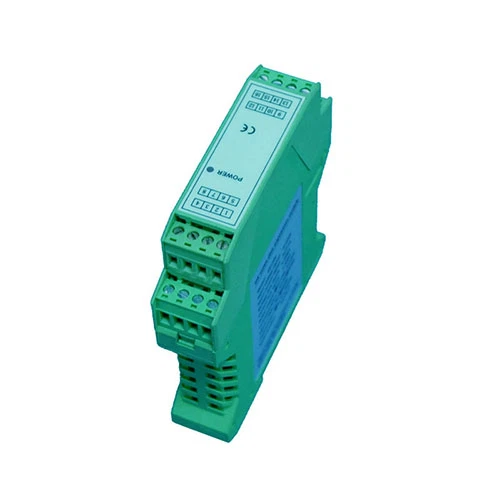
Our modules are equipped with high - quality shielding enclosures. These enclosures are made of materials that can effectively block electromagnetic radiation. The shielding design reduces the impact of external electromagnetic fields on the internal circuits of the module. Additionally, proper grounding is implemented to provide a low - impedance path for the interference current, ensuring that the interference is safely conducted to the ground.

Isolation Technology
We use advanced isolation technology to separate different circuits and channels within the module. For example, optical isolation and magnetic isolation are employed to prevent signal crosstalk between channels. This ensures that the signals on each channel are independent and not affected by the signals on other channels. In our 8 - Channel Analog Input 485 Module, the isolation technology provides reliable protection against cross - talk interference, allowing for accurate measurement on each channel.
Power Supply Filtering
To deal with power supply fluctuations, our modules are equipped with sophisticated power supply filtering circuits. These circuits can filter out high - frequency noise and voltage variations in the power supply. They ensure that the module receives a stable and clean power supply, which is essential for its normal operation. For instance, in our AC Voltage Or Current True RMS Transmitter, the power supply filtering technology effectively eliminates power - related interference, providing accurate and stable measurement results.
Digital Signal Processing
We also utilize digital signal processing (DSP) algorithms to enhance the anti - interference ability of our modules. These algorithms can analyze and process the measured signals in real - time, filtering out interference signals and extracting the useful information. DSP technology can adapt to different interference environments and adjust the processing parameters accordingly, ensuring the accuracy of frequency measurement and event counting.
Applications and Case Studies
Our Frequency Measurement - Counting Acquisition Modules with high anti - interference ability have been widely used in various applications.
Industrial Automation
In industrial automation systems, our modules are used for monitoring and controlling the speed of motors, counting the number of products on a production line, and measuring the frequency of electrical signals. For example, in a factory that produces automotive parts, our 4 - Channel Universal Input Modbus Module is used to measure the frequency of the motors driving the conveyor belts. The high anti - interference ability of the module ensures accurate speed control and efficient production.
Power Systems
In power systems, accurate frequency measurement is crucial for maintaining grid stability. Our modules are used to monitor the frequency of the power grid and detect any frequency deviations. In a large - scale power plant, our Frequency Measurement - Counting Acquisition Module can accurately measure the frequency of the generated electricity, even in the presence of strong electromagnetic interference from the generators and transformers.
Scientific Research
In scientific research, precise frequency measurement and event counting are often required. Our modules are used in laboratories for experiments in physics, chemistry, and biology. For example, in a physics experiment studying the behavior of atomic clocks, our module can accurately measure the frequency of the atomic oscillations, providing reliable data for the research.
Conclusion
The anti - interference ability of a Frequency Measurement - Counting Acquisition Module is a critical factor that determines its performance and reliability. As a professional supplier, we are committed to providing high - quality modules with excellent anti - interference ability. Our advanced technologies and design features ensure that our modules can operate accurately and stably in complex electromagnetic environments.
If you are looking for a reliable Frequency Measurement - Counting Acquisition Module for your application, we invite you to contact us for further discussion and procurement. We have a team of experts who can provide you with detailed technical support and customized solutions.
References
- "Electromagnetic Compatibility Engineering" by Henry W. Ott.
- "Digital Signal Processing: Principles, Algorithms, and Applications" by John G. Proakis and Dimitris G. Manolakis.
- Technical documents of our Frequency Measurement - Counting Acquisition Modules.