

Hey there! As a supplier of Color LCD Display Temperature Controllers, I often get asked about the power consumption of these nifty devices. So, I thought I'd sit down and write this blog to give you all the lowdown on what goes into the power usage of a Color LCD Display Temperature Controller.
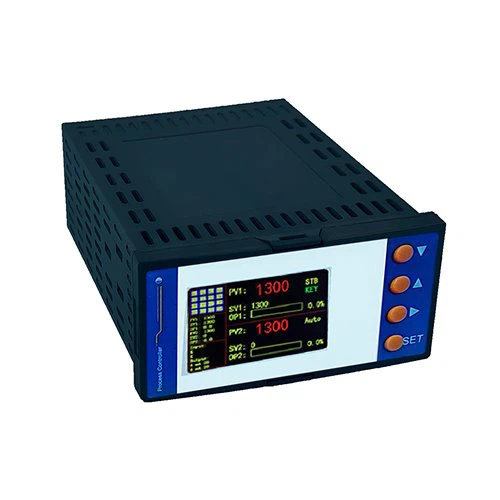
First things first, let's understand what a Color LCD Display Temperature Controller is. It's a device that helps in regulating and monitoring temperature with the help of a colorful LCD display. You can easily set the desired temperature, view the current temperature, and get all sorts of data about the temperature control process right on that bright display. It's super handy in a bunch of industries, from manufacturing to food processing, and even in some home applications.
Now, the power consumption of a Color LCD Display Temperature Controller can vary quite a bit. There are several factors that play a role in determining how much power these controllers use.
Factors Affecting Power Consumption
Display Size and Resolution
The size and resolution of the color LCD display are big players here. A larger display with a higher resolution will generally consume more power. Think about it like your TV at home. A bigger screen with a 4K resolution is going to use more electricity than a smaller, lower - resolution one. The same principle applies to these temperature controllers. The pixels on a high - resolution display need more power to light up and show all those vivid colors and sharp details.
Backlighting
The backlighting of the LCD display is another major factor. Most color LCD displays use LED backlighting these days. The brightness of the backlight has a direct impact on power consumption. If you set the backlight to its maximum brightness, it'll suck up more power compared to a lower brightness setting. Some controllers allow you to adjust the backlight brightness, which can be a great way to save power if you don't need the display to be super bright all the time.
Processing Power
The internal processing power of the temperature controller also matters. A controller with a more powerful microprocessor will use more power. These processors are responsible for handling all the calculations related to temperature control, such as comparing the current temperature with the setpoint, and adjusting the output accordingly. If the controller has advanced features like Group PID Control Temperature Controller, which requires more complex algorithms and calculations, it'll need a more powerful processor and thus consume more power.

Output Load
The power consumption can also be affected by the output load. Some temperature controllers have different types of outputs, like relays or solid - state relays, which are used to control heating or cooling devices. If the output load is high, for example, if it's controlling a large heating element, the controller may need to draw more power to drive that load.
Typical Power Consumption Ranges
On average, a small - to - medium - sized Color LCD Display Temperature Controller with a standard display size and resolution might consume anywhere from 2 to 5 watts. This is when it's operating under normal conditions, with the backlight set to a medium brightness level and handling a typical output load.
However, larger controllers with high - end features and bigger displays could consume up to 10 - 15 watts or even more. For instance, a Dual - Master Outputs Temperature Controller that has to handle multiple output loads and perform complex control functions will likely have a higher power consumption.
Energy - Saving Tips
If you're looking to reduce the power consumption of your Color LCD Display Temperature Controller, here are some tips:
- Adjust Backlight Brightness: As mentioned earlier, lowering the backlight brightness can significantly reduce power usage. You can set it to a level that's still visible but not overly bright.
- Optimize Processing Settings: If your controller allows it, you can adjust the processing settings to a more energy - efficient mode. For example, reducing the sampling rate if you don't need real - time, high - frequency temperature readings can save power.
- Choose the Right Output Type: Depending on your application, choose the most energy - efficient output type. For example, solid - state relays can be more energy - efficient than traditional mechanical relays in some cases.
Comparing with Other Temperature Controllers
When compared to traditional temperature controllers without color LCD displays, Color LCD Display Temperature Controllers generally consume a bit more power. Traditional controllers often have simple LED displays or no display at all, which use less power. But the added benefits of a color LCD display, such as better visibility, more detailed information, and easier user interaction, often outweigh the slightly higher power consumption.
For example, a High - Precision Universal Input Temperature Controller with a color LCD display may use more power than a basic temperature controller, but it offers a much better user experience and more accurate temperature control.
Importance of Understanding Power Consumption
Understanding the power consumption of your Color LCD Display Temperature Controller is important for several reasons. Firstly, it can help you manage your energy costs. If you have multiple controllers in a large industrial setup, the cumulative power consumption can be significant. By optimizing the power usage of these controllers, you can save a lot of money on your electricity bills.
Secondly, it's also important from an environmental perspective. Using energy - efficient devices helps reduce your carbon footprint and contributes to a more sustainable future.
Contact for Purchase and Consultation
If you're interested in purchasing a Color LCD Display Temperature Controller or have any questions about power consumption or other features, feel free to reach out. We're here to help you find the right controller for your specific needs. Whether you're looking for a basic model or a high - end controller with advanced features, we've got you covered.
References
- General knowledge about temperature controllers and electronics.
- Industry reports on energy consumption of electronic devices.