

Power regulators are crucial components in various electrical systems, helping to control and maintain a stable power supply. As a power regulator supplier, I've had the opportunity to work with a wide range of these devices, each with its own unique features and applications. In this blog, I'll break down the different types of power regulators out there.
Linear Regulators
Let's start with linear regulators. These are some of the simplest and most commonly used power regulators. They work by dissipating excess voltage as heat to maintain a constant output voltage. One of the big pluses of linear regulators is their low noise output. This makes them ideal for applications where a clean power supply is a must, like in audio equipment or sensitive electronic circuits.
However, they're not without their drawbacks. Linear regulators aren't very efficient, especially when there's a large difference between the input and output voltages. The excess power gets turned into heat, which means you might need heat sinks to keep the regulator from overheating. This inefficiency also means they're not the best choice for high - power applications.
Switching Regulators
Switching regulators are a different beast. Instead of dissipating excess power as heat, they use a switching element (usually a transistor) to control the flow of power. This makes them much more efficient than linear regulators, especially in high - power applications.
There are a few different types of switching regulators:
- Buck Regulators: These are used to step down the input voltage to a lower output voltage. They're commonly found in battery - powered devices, where you might want to reduce the voltage from a battery to a level suitable for the device's components. For example, if you have a 12V battery and your device needs 5V, a buck regulator can do the job.
- Boost Regulators: On the flip side, boost regulators step up the input voltage to a higher output voltage. They're useful in applications where you need a higher voltage than what your power source can provide. For instance, some LED lighting systems might require a higher voltage than a standard battery can supply, so a boost regulator can be used to meet that requirement.
- Buck - Boost Regulators: As the name suggests, these regulators can either step up or step down the input voltage. They're very versatile and can be used in a wide range of applications where the input voltage might vary.
SCR (Silicon - Controlled Rectifier) Regulators
SCR regulators are another important type of power regulator. They use SCRs, which are semiconductor devices that can control large amounts of power. SCR regulators are often used in industrial applications, such as controlling the power to heating elements, motors, and lighting systems.
One of the advantages of SCR regulators is their ability to handle high currents and voltages. They can also be used to control the phase angle of the AC power supply, which allows for precise control of the power delivered to the load.
We offer some great SCR - based products. For example, our Single - phase 50A Dual - communication SCR Controller is designed for applications that require high - current control and dual - communication capabilities. It's a reliable choice for industrial setups where you need to manage power effectively.
Another option is our 2PH 660V SCR Thyristor Controller. This controller is built to handle high - voltage applications, making it suitable for large - scale industrial operations.
Thyristor Regulators
Thyristor regulators are similar to SCR regulators but can refer to a broader class of semiconductor devices. Thyristors can be used to control both AC and DC power. They're often used in applications where you need to control the power flow in a circuit, such as in motor speed control or power factor correction.
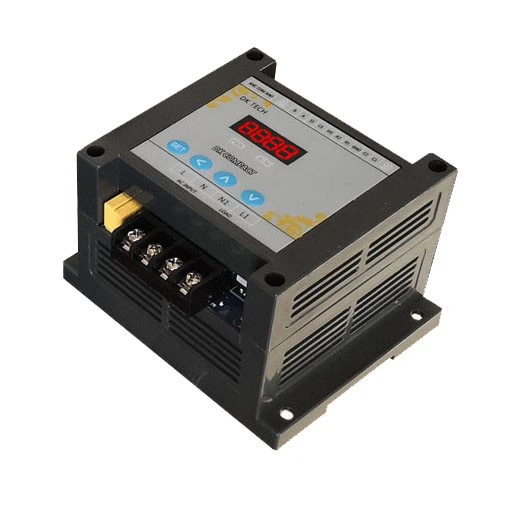

Our Single - phase 5A Thyristor Regulator is a great example of a thyristor - based power regulator. It's designed for single - phase applications and can handle a current of up to 5A. This makes it a good choice for smaller - scale electrical systems.
Programmable Power Regulators
Programmable power regulators are becoming more and more popular. These regulators allow you to adjust the output voltage and current settings through a programming interface. This flexibility makes them ideal for applications where the power requirements might change over time or where you need to fine - tune the power supply for different components.
For example, in a research laboratory, you might have different types of equipment with varying power requirements. A programmable power regulator can be adjusted to meet the specific needs of each piece of equipment.
Uninterruptible Power Supplies (UPS)
While not strictly a power regulator in the traditional sense, UPS systems are an important part of power management. They provide backup power in case of a power outage, ensuring that critical equipment stays running.
UPS systems usually have a built - in power regulator to maintain a stable output voltage during normal operation and when switching to battery power. They're commonly used in data centers, hospitals, and other facilities where a continuous power supply is essential.
Choosing the Right Power Regulator
When it comes to choosing the right power regulator for your application, there are a few factors to consider. First, you need to think about the input and output voltage requirements. Make sure the regulator can handle the voltage range you need.
Next, consider the power requirements. If you're dealing with a high - power application, a switching regulator or an SCR regulator might be the best choice. For low - power, low - noise applications, a linear regulator could be more suitable.
Efficiency is also an important factor. If you're looking to save energy and reduce heat generation, a more efficient regulator like a switching regulator is a better option.
Finally, think about any special features you might need, such as programmability or dual - communication capabilities.
As a power regulator supplier, I'm here to help you make the right choice. Whether you're working on a small - scale project or a large - scale industrial application, we have a wide range of power regulators to meet your needs. If you're interested in learning more about our products or have any questions about power regulators, don't hesitate to reach out. We're ready to assist you in finding the perfect power regulator for your specific requirements. Let's start a conversation and see how we can work together to solve your power management challenges.
References
- Horowitz, P., & Hill, W. (1989). The Art of Electronics. Cambridge University Press.
- Witte, D. (2012). Power Electronics: Converters, Applications, and Design. Wiley.