

In the dynamic landscape of China's power industry, the cooperation between the China power regulator and other departments plays a pivotal role in ensuring the stable, efficient, and sustainable operation of the power grid. As a supplier to the China power regulator, I have witnessed firsthand the multifaceted nature of these collaborations and their far - reaching impacts.

The Significance of Inter - departmental Cooperation
The power sector is an intricate web that involves various aspects such as generation, transmission, distribution, and consumption. To manage this complexity, the China power regulator cannot work in isolation. It needs to cooperate with other departments to achieve common goals. For instance, environmental protection departments are crucial partners. With the increasing emphasis on clean energy and reducing carbon emissions, the power regulator and environmental protection departments collaborate to promote the integration of renewable energy sources like wind and solar power into the grid. This cooperation helps in setting up environmental standards for power plants, ensuring that they comply with pollution control requirements while generating electricity.
Another key area of cooperation is with the economic planning departments. These departments are responsible for formulating long - term economic development strategies. The power regulator works closely with them to align power supply plans with economic growth projections. By doing so, it can ensure that there is an adequate and reliable power supply to support industrial production, commercial activities, and residential needs. This is essential for maintaining a stable economic environment and promoting sustainable development.
Modes of Cooperation
Information Sharing
One of the fundamental ways in which the China power regulator cooperates with other departments is through information sharing. Each department has its own set of data and insights. For example, the meteorological department can provide valuable information about weather conditions, which can significantly affect power generation from renewable sources. Solar power generation is highly dependent on sunlight, and wind power is related to wind speed and direction. By sharing this information, the power regulator can better plan power generation and distribution, and adjust grid operations accordingly.
Similarly, the power regulator shares data on power consumption patterns, grid stability, and power plant performance with other departments. This information can be used by economic planning departments to make informed decisions about industrial layout and energy - intensive projects. It also helps environmental protection departments to monitor the environmental impact of power generation activities.
Joint Policy - making
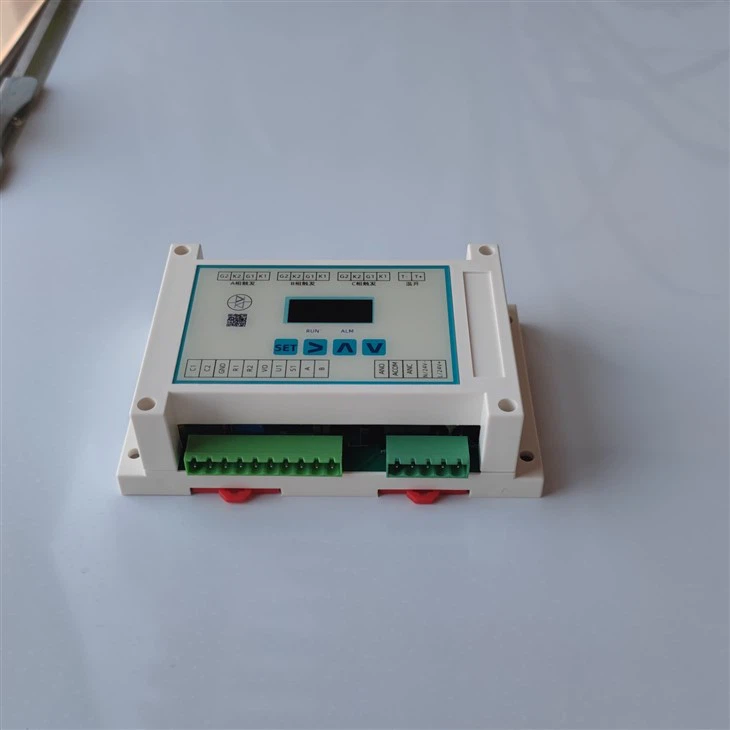
Joint policy - making is another important aspect of cooperation. The power regulator, along with other relevant departments, participates in the formulation of policies that govern the power industry. For example, when it comes to promoting energy efficiency, the power regulator, together with the industry and commerce department and the housing and urban - rural development department, can develop policies to encourage energy - saving measures in industrial enterprises and residential buildings. These policies may include incentives for the adoption of energy - efficient equipment, such as Three - Phase Thyristor Trigger, which can optimize power consumption in industrial processes.
In addition, joint policies can be formulated to support the development of new energy technologies. The power regulator, in cooperation with the science and technology department, can design policies to promote research and development, demonstration projects, and commercialization of emerging energy technologies. This can help China to stay at the forefront of the global energy transition.
Coordinated Law Enforcement
Coordinated law enforcement is essential to ensure compliance with power - related laws and regulations. The power regulator often works with the market supervision department and the public security department to crack down on illegal power - related activities. For example, illegal power generation, power theft, and unauthorized grid connection are serious issues that can disrupt the normal operation of the power grid and pose safety risks. Through coordinated law enforcement, these illegal activities can be effectively curbed.
The power regulator can also cooperate with environmental protection law enforcement agencies to ensure that power plants comply with environmental regulations. If a power plant violates emission standards, the power regulator can work with the environmental protection department to enforce penalties and require the plant to take corrective actions.
Challenges and Solutions in Cooperation
Data Compatibility and Standardization
One of the challenges in cooperation is data compatibility and standardization. Different departments may use different data formats and standards, which can make it difficult to share and integrate data effectively. To address this issue, the relevant departments can work together to develop unified data standards. This will facilitate seamless data exchange and improve the accuracy and efficiency of decision - making.
Interest Coordination
Another challenge is interest coordination. Each department may have its own goals and interests. For example, the economic development department may focus on promoting high - growth industries that require large amounts of power, while the environmental protection department may be more concerned about reducing carbon emissions. To overcome this challenge, the power regulator needs to play a mediating role. It can organize regular meetings and consultations to promote communication and understanding among different departments, and find a balance between different interests.
The Role of Suppliers in Facilitating Cooperation
As a supplier to the China power regulator, we play an important role in facilitating cooperation. Our products, such as the 1PH 690V Thyristor Controller and Single - phase 50A Dual - communication SCR Controller, are designed to improve power efficiency and grid stability. These products can help the power regulator to better achieve its goals in cooperation with other departments.
For example, our thyristor controllers can be used in power plants to optimize power generation processes. By improving the efficiency of power generation, it can reduce the environmental impact of power plants, which is in line with the goals of environmental protection departments. At the same time, it can also ensure a more reliable power supply, which supports the economic development goals of economic planning departments.
We also provide technical support and after - sales services to the power regulator. This helps to ensure the proper operation of our products and the overall stability of the power grid. In addition, we can share our industry knowledge and technological insights with the power regulator, which can be used in its cooperation with other departments. For example, we can provide information about the latest trends in power - control technology, which can be useful for joint policy - making and technological innovation.
Conclusion and Call for Cooperation
In conclusion, the cooperation between the China power regulator and other departments is essential for the healthy development of the power industry. Through information sharing, joint policy - making, and coordinated law enforcement, they can achieve common goals in power supply, environmental protection, and economic development. As a supplier, we are committed to supporting this cooperation by providing high - quality products and services.
If you are interested in our products, such as the Three - Phase Thyristor Trigger, 1PH 690V Thyristor Controller, and Single - phase 50A Dual - communication SCR Controller, and would like to discuss potential procurement opportunities, please feel free to reach out. We are looking forward to establishing a long - term and mutually beneficial cooperation with you.
References
- Ministry of Industry and Information Technology of the People's Republic of China. (Relevant reports on power industry development and cooperation).
- National Energy Administration. (Policies and regulations on power grid operation and inter - departmental cooperation).
- Publications on environmental protection and energy - related research.