

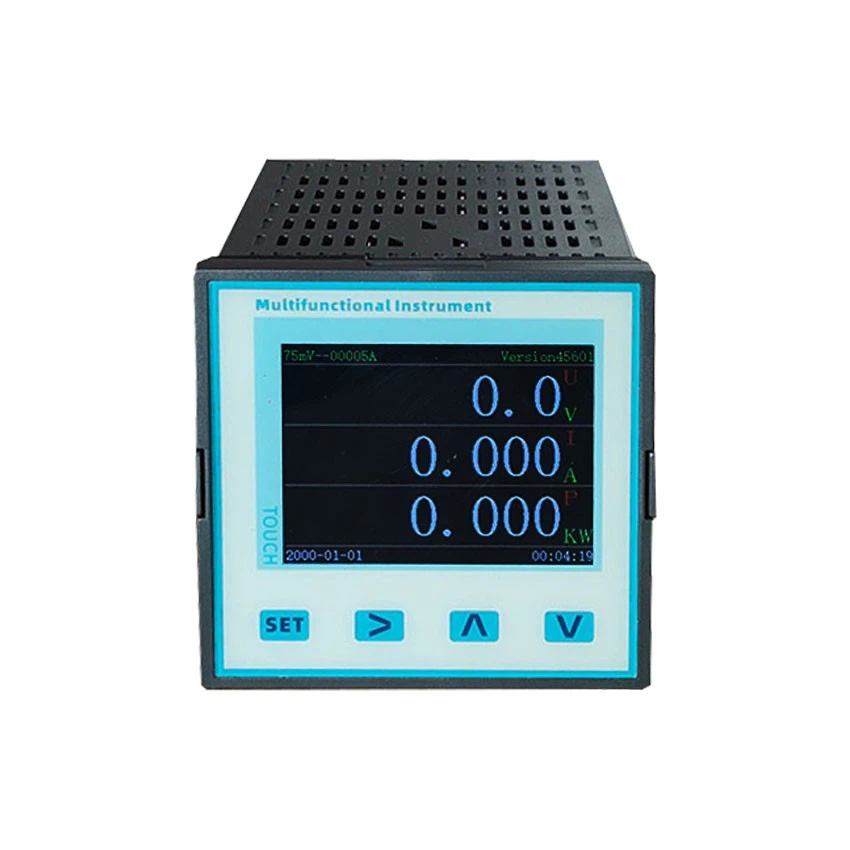
Multifunctional power meters are essential devices in modern electrical systems, offering a comprehensive range of measurements and monitoring capabilities. As a supplier of multifunctional power meters, I am excited to share with you how these remarkable devices work and the benefits they bring to various applications.
Basic Principles of Multifunctional Power Meters
At the heart of a multifunctional power meter lies the ability to measure and analyze electrical parameters accurately. These meters are designed to measure key electrical quantities such as voltage, current, power, energy, frequency, and power factor. By providing real-time data on these parameters, multifunctional power meters enable users to monitor the performance of electrical systems, identify potential issues, and optimize energy consumption.
The operation of a multifunctional power meter is based on several fundamental principles. First, the meter uses sensors to measure the electrical quantities. For voltage measurement, a voltage transformer or a direct connection to the electrical circuit is used. The voltage sensor converts the high voltage in the circuit to a lower, measurable voltage that can be processed by the meter. Similarly, for current measurement, a current transformer or a shunt resistor is employed to measure the current flowing through the circuit.
Once the electrical quantities are measured, the meter processes the data using advanced algorithms and microprocessors. These algorithms analyze the measured values and calculate various electrical parameters such as active power, reactive power, apparent power, and energy consumption. The processed data is then displayed on the meter's screen or transmitted to a remote monitoring system for further analysis.
Measurement of Electrical Parameters
Let's take a closer look at how multifunctional power meters measure different electrical parameters:
Voltage Measurement
Voltage is the electrical potential difference between two points in a circuit. Multifunctional power meters measure voltage using voltage sensors, which can be either voltage transformers or direct connections. Voltage transformers are used to step down the high voltage in the circuit to a lower, measurable voltage. The meter then measures this lower voltage and converts it back to the actual voltage in the circuit.
Current Measurement
Current is the flow of electric charge in a circuit. Multifunctional power meters measure current using current sensors, which can be either current transformers or shunt resistors. Current transformers are used to step down the high current in the circuit to a lower, measurable current. The meter then measures this lower current and converts it back to the actual current in the circuit. Shunt resistors, on the other hand, are used to measure the current by measuring the voltage drop across the resistor.
Power Measurement
Power is the rate at which electrical energy is consumed or produced. Multifunctional power meters measure power by multiplying the voltage and current values and taking into account the power factor. The power factor is a measure of how effectively the electrical energy is being used in the circuit. A power factor of 1 indicates that all the electrical energy is being used effectively, while a power factor less than 1 indicates that some of the electrical energy is being wasted.
Energy Measurement
Energy is the total amount of electrical energy consumed or produced over a period of time. Multifunctional power meters measure energy by integrating the power over time. The meter keeps track of the energy consumption or production and displays the total energy on the screen.
Frequency Measurement
Frequency is the number of cycles per second of an alternating current. Multifunctional power meters measure frequency by analyzing the waveform of the electrical signal. The meter calculates the frequency based on the time interval between two consecutive peaks or troughs in the waveform.
Power Factor Measurement
Power factor is a measure of how effectively the electrical energy is being used in the circuit. Multifunctional power meters measure power factor by comparing the phase angle between the voltage and current waveforms. A power factor of 1 indicates that the voltage and current waveforms are in phase, while a power factor less than 1 indicates that the voltage and current waveforms are out of phase.
Advanced Features of Multifunctional Power Meters
In addition to basic electrical parameter measurement, multifunctional power meters offer a range of advanced features that enhance their functionality and usability. Some of these features include:

Data Logging
Multifunctional power meters can log electrical data over a period of time. This data can be used for analysis, troubleshooting, and energy management. The meter can store the data in its internal memory or transmit it to a remote monitoring system for further analysis.
Communication Interfaces
Multifunctional power meters are equipped with various communication interfaces such as Modbus, Ethernet, and RS-485. These interfaces allow the meter to communicate with other devices such as programmable logic controllers (PLCs), data loggers, and remote monitoring systems. This enables users to monitor and control the electrical system remotely.
Alarm Function
Multifunctional power meters can be configured to issue alarms when certain electrical parameters exceed predefined limits. This helps users to detect and respond to potential issues in the electrical system in a timely manner.
Harmonic Analysis
Multifunctional power meters can perform harmonic analysis to identify and measure the harmonic content in the electrical system. Harmonics are unwanted frequencies that can cause problems such as overheating, equipment damage, and power quality issues. By analyzing the harmonic content, users can take appropriate measures to mitigate the effects of harmonics.
Applications of Multifunctional Power Meters
Multifunctional power meters are widely used in various applications, including:
Industrial Applications
In industrial settings, multifunctional power meters are used to monitor and control the electrical consumption of machinery and equipment. They help to optimize energy usage, reduce costs, and improve the reliability of the electrical system.
Commercial Applications
In commercial buildings, multifunctional power meters are used to monitor and manage the electrical consumption of lighting, HVAC systems, and other electrical loads. They help to identify energy-saving opportunities and improve the energy efficiency of the building.
Residential Applications
In residential settings, multifunctional power meters are used to monitor and manage the electrical consumption of household appliances and equipment. They help to reduce energy costs and promote energy conservation.
Our Product Range
As a supplier of multifunctional power meters, we offer a wide range of products to meet the diverse needs of our customers. Our product range includes Single-phase Multifunction Meter, Voltage and Current Meter with Transmission, and High Precision Measurement Multifunctional Meter. These meters are designed to provide accurate and reliable measurements of electrical parameters, and they come with advanced features such as data logging, communication interfaces, and alarm functions.
Contact Us for Procurement
If you are interested in purchasing multifunctional power meters for your application, we invite you to contact us for procurement discussions. Our team of experts will be happy to assist you in selecting the right product for your needs and providing you with detailed information about our products and services.
References
- Electrical Engineering Handbook, Third Edition, by Richard C. Dorf
- Power Systems Analysis and Design, Fifth Edition, by J. Duncan Glover, Mulukutla S. Sarma, and Thomas J. Overbye
- Handbook of Electric Power Calculations, Fourth Edition, by Hadi Saadat