

Hey there! As a supplier of multifunctional power meters, I often get asked if these nifty devices can measure apparent power. Well, let's dive right into it and find out!
First off, let's quickly go over what apparent power is. Apparent power, denoted as S, is the combination of real power (P) and reactive power (Q) in an AC circuit. It's measured in volt - amperes (VA). Real power is the power that actually does useful work, like lighting up a bulb or running a motor. Reactive power, on the other hand, is the power that sloshes back and forth between the source and the load due to inductive or capacitive elements in the circuit.
Now, can multifunctional power meters measure apparent power? The short answer is yes! Most modern multifunctional power meters are designed to measure a whole bunch of electrical parameters, and apparent power is definitely on that list.
These meters work by sampling the voltage and current waveforms in the circuit. They use sophisticated algorithms to calculate the apparent power based on the measured voltage and current values. The basic formula for apparent power is S = V × I, where V is the RMS (root - mean - square) voltage and I is the RMS current.
Our range of multifunctional power meters, such as the 3PH DIN Rail Mounting Multifunctional Meter, is equipped with advanced sensors and microprocessors. These components can accurately measure the voltage and current waveforms, even in complex electrical systems. Whether you're dealing with a single - phase or a three - phase circuit, these meters can handle it.
The Intelligent Voltage and Current Meter is another great option. It not only measures apparent power but also provides real - time data on other important parameters like real power, reactive power, power factor, and frequency. This makes it a valuable tool for monitoring and managing electrical systems.
For those who need an extra layer of safety, our Digital Voltage and Current Meter with Alarm is a top choice. It can be set to trigger an alarm if the measured apparent power exceeds a certain threshold. This is especially useful in industrial settings where overloading can cause serious damage to equipment.
One of the key advantages of using multifunctional power meters to measure apparent power is the accuracy. These meters are calibrated to provide highly precise measurements, which is crucial for applications where even small errors can have significant consequences. For example, in power distribution systems, accurate measurement of apparent power helps in determining the load capacity and in optimizing the energy consumption.
Another benefit is the convenience. With a single multifunctional power meter, you can get all the electrical parameters you need in one place. This eliminates the need for multiple standalone meters, saving you both time and money.
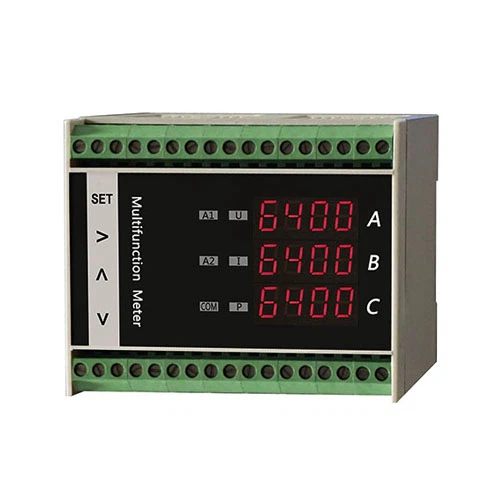

Moreover, these meters often come with communication interfaces that allow you to connect them to a computer or a network. This enables remote monitoring and data logging, which is extremely useful for large - scale electrical systems. You can keep an eye on the apparent power and other parameters from anywhere, at any time.
So, if you're in the market for a reliable way to measure apparent power, our multifunctional power meters are the way to go. They offer accuracy, convenience, and a whole lot more. Whether you're an electrician, an engineer, or a facility manager, these meters will surely meet your needs.
If you're interested in learning more about our products or are looking to make a purchase, don't hesitate to get in touch. We're always here to help you find the right solution for your specific requirements. Let's start a conversation and see how we can work together to optimize your electrical systems.
References:
- Electrical Engineering Handbook by Richard C. Dorf
- Power System Analysis and Design by J. Duncan Glover, Mulukutla S. Sarma, and Thomas J. Overbye