

In the realm of data acquisition and measurement, frequency measurement - counting acquisition modules play a pivotal role. As a reliable supplier of Frequency Measurement - Counting Acquisition Modules, I am delighted to delve into the principle behind these essential devices.

The Basics of Frequency Measurement
Frequency, in the context of electrical signals or other periodic phenomena, refers to the number of cycles that occur in a given time period. It is typically measured in Hertz (Hz), where 1 Hz represents one cycle per second. The accurate measurement of frequency is crucial in various fields, including power systems, telecommunications, and industrial automation.
The fundamental concept of frequency measurement is to count the number of signal cycles within a specific time interval. This can be achieved through different methods, but the most common approach involves using a counter circuit. A counter is a digital circuit that increments its value each time it detects a rising or falling edge of the input signal. By measuring the time over which these counts are accumulated, the frequency of the signal can be calculated.
The Working Principle of a Frequency Measurement - Counting Acquisition Module
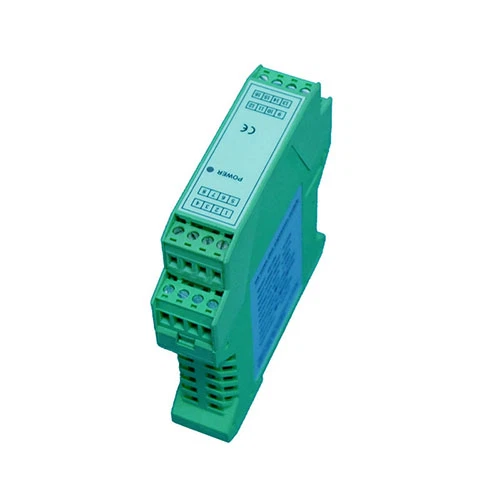
A Frequency Measurement - Counting Acquisition Module is designed to perform accurate frequency measurements and counting tasks. It consists of several key components, each playing a specific role in the measurement process.
Input Conditioning
The first stage of the module is the input conditioning circuit. This circuit is responsible for preparing the input signal for further processing. It may include functions such as signal amplification, filtering, and level shifting. Signal amplification is used to increase the amplitude of the input signal to a level that can be easily processed by the subsequent stages. Filtering is employed to remove any unwanted noise or interference from the signal, ensuring that only the relevant frequency components are passed through. Level shifting is used to adjust the voltage level of the input signal to match the input requirements of the counter circuit.
Counter Circuit
The heart of the Frequency Measurement - Counting Acquisition Module is the counter circuit. This circuit is designed to count the number of rising or falling edges of the input signal within a specified time interval. The counter can be implemented using various digital logic components, such as flip - flops and counters. In modern modules, microcontrollers or field - programmable gate arrays (FPGAs) are often used to implement the counter function due to their flexibility and programmability.
The counter circuit starts counting when a start signal is received and stops counting when a stop signal is received. The time interval between the start and stop signals is precisely controlled by a timer circuit. The timer circuit generates a stable time base, which is used to define the measurement period.
Timer Circuit
The timer circuit is responsible for generating the time base for the frequency measurement. It can be implemented using a crystal oscillator or a clock generator. A crystal oscillator provides a highly stable and accurate frequency reference, which is essential for precise frequency measurements. The timer circuit generates a series of clock pulses, which are used to control the start and stop of the counter circuit.
Data Processing and Output
Once the counting process is completed, the counter value is transferred to the data processing unit. The data processing unit calculates the frequency of the input signal based on the counter value and the measurement period. The frequency value is then converted into a digital format and can be output in various ways, such as through a serial communication interface (e.g., RS - 232, RS - 485) or a digital output port.
In addition to frequency measurement, the Frequency Measurement - Counting Acquisition Module can also perform counting tasks. For example, it can count the number of events (such as pulses from a sensor) over a specified time period. This counting function is useful in applications such as flow measurement, where the number of pulses from a flow sensor is proportional to the volume of fluid flowing through a pipe.
Applications of Frequency Measurement - Counting Acquisition Modules
Frequency Measurement - Counting Acquisition Modules have a wide range of applications in different industries.
Power Systems
In power systems, accurate frequency measurement is essential for maintaining the stability and reliability of the grid. Frequency Measurement - Counting Acquisition Modules are used to monitor the frequency of the electrical power supply. Any deviation from the nominal frequency (e.g., 50 Hz or 60 Hz) can indicate a problem in the power system, such as a generator failure or an imbalance between power generation and consumption. By continuously monitoring the frequency, operators can take appropriate actions to prevent power outages and ensure the quality of the power supply.
Telecommunications
In the telecommunications industry, frequency measurement is crucial for the proper operation of communication systems. For example, in wireless communication systems, the frequency of the radio signals needs to be accurately controlled to avoid interference with other channels. Frequency Measurement - Counting Acquisition Modules are used to measure and monitor the frequency of the radio signals, ensuring that they are within the specified frequency bands.
Industrial Automation
In industrial automation, Frequency Measurement - Counting Acquisition Modules are used in various applications, such as speed control, position sensing, and process monitoring. For example, in a motor control system, the frequency of the motor's electrical signal is proportional to its speed. By measuring the frequency, the speed of the motor can be accurately controlled. In addition, these modules can be used to count the number of parts produced on a production line, providing valuable information for production management.
Related Products
As a supplier, we also offer other related products that complement our Frequency Measurement - Counting Acquisition Modules. For example, our AC Voltage Or Current True RMS Transmitter is designed to accurately measure the true root - mean - square (RMS) value of AC voltage or current signals. This product is useful in applications where the accurate measurement of AC power is required.
Our Universal Input RTU Acquisition Module is a versatile device that can accept a wide range of input signals, including analog and digital signals. It can be used for data acquisition and monitoring in various industrial and environmental applications.
Conclusion
In conclusion, the principle of a Frequency Measurement - Counting Acquisition Module is based on the accurate counting of signal cycles within a specific time interval. By using a combination of input conditioning, counter, timer, and data processing circuits, these modules can provide highly accurate frequency measurements and counting functions. With their wide range of applications in power systems, telecommunications, and industrial automation, Frequency Measurement - Counting Acquisition Modules are essential devices for modern data acquisition and measurement systems.
If you are interested in our Frequency Measurement - Counting Acquisition Modules or any of our other products, please feel free to contact us for further information and to discuss your specific requirements. We are committed to providing high - quality products and excellent customer service.
References
- "Digital Signal Processing: Principles, Algorithms, and Applications" by John G. Proakis and Dimitris G. Manolakis
- "Power System Analysis and Design" by J. Duncan Glover, Mulukutla S. Sarma, and Thomas J. Overbye
- "Telecommunication Switching Systems and Networks" by P. K. Biswas