

As a supplier of Dual - Loop PID Temperature Controllers, I often receive inquiries about the power consumption of these devices. Understanding the power consumption is crucial for customers, as it directly impacts operational costs and energy efficiency. In this blog, I will delve into the factors that influence the power consumption of a Dual - Loop PID Temperature Controller and provide some insights to help you make informed decisions.
1. Basic Components and Their Power Requirements
A Dual - Loop PID Temperature Controller consists of several key components, each with its own power consumption characteristics.
Microcontroller
The microcontroller is the brain of the temperature controller. It processes the input signals from the temperature sensors, performs the PID calculations, and generates the output signals to control the heating or cooling elements. Modern microcontrollers are designed to be energy - efficient, but their power consumption can vary depending on the clock speed, processing load, and the number of peripherals in use. Generally, a low - power microcontroller in a Dual - Loop PID Temperature Controller may consume a few milliwatts to tens of milliwatts.
Display
Many Dual - Loop PID Temperature Controllers are equipped with a display to show the current temperature, setpoints, and other relevant information. The type of display used can significantly affect power consumption. For example, a simple LCD (Liquid Crystal Display) typically consumes less power compared to an OLED (Organic Light - Emitting Diode) display. An LCD display in a temperature controller may consume around 10 - 50 milliwatts, while an OLED display could consume more, especially if it has a high - resolution and backlighting.
Sensor Interface
The sensor interface is responsible for connecting the temperature sensors to the microcontroller. It amplifies and conditions the sensor signals to make them suitable for processing. The power consumption of the sensor interface depends on the type of sensors used and the complexity of the signal conditioning circuitry. For common thermocouples or RTDs (Resistance Temperature Detectors), the sensor interface may consume a few milliwatts.
Output Drivers
The output drivers are used to control the heating or cooling elements. They convert the low - power control signals from the microcontroller into high - power signals that can drive relays, solid - state relays, or other power - switching devices. The power consumption of the output drivers is mainly determined by the type of output device and the load they are driving. For example, a relay driver may consume a few milliwatts to operate the relay coil, while a solid - state relay driver may have different power requirements depending on its design.
2. Operating Modes and Power Consumption
The power consumption of a Dual - Loop PID Temperature Controller can also vary depending on its operating mode.
Standby Mode
In standby mode, the temperature controller is still powered on but is not actively controlling the temperature. It may be waiting for a user input or for the temperature to reach a certain threshold. During standby mode, most of the components in the controller are in a low - power state. The microcontroller may be running at a reduced clock speed, and the display may be dimmed or turned off. As a result, the power consumption in standby mode is typically very low, often less than 1 watt.
Normal Operating Mode
In normal operating mode, the temperature controller is actively monitoring the temperature and adjusting the output to maintain the setpoint. The power consumption in this mode is higher than in standby mode because the microcontroller is performing continuous PID calculations, the display is showing real - time information, and the output drivers are controlling the heating or cooling elements. The actual power consumption in normal operating mode can range from a few watts to tens of watts, depending on the specific design and the load requirements.
High - Load Operating Mode
In some cases, the temperature controller may need to operate under high - load conditions, such as when the temperature difference between the current temperature and the setpoint is large. In high - load operating mode, the output drivers may need to supply more power to the heating or cooling elements, which can significantly increase the overall power consumption of the controller. For example, if the controller is driving a large - capacity heater, the power consumption could be several tens of watts or even higher.
3. Impact of External Factors on Power Consumption
External factors can also have an impact on the power consumption of a Dual - Loop PID Temperature Controller.
Ambient Temperature
The ambient temperature can affect the performance and power consumption of the temperature controller. In high - temperature environments, the components in the controller may need to work harder to dissipate heat, which can increase power consumption. Additionally, some components, such as the microcontroller, may have a reduced efficiency at high temperatures, leading to higher power consumption. On the other hand, in low - temperature environments, the heating elements may need to consume more power to maintain the setpoint temperature.
Load Characteristics
The characteristics of the heating or cooling load can also influence power consumption. For example, if the load has a high thermal inertia, it may take longer for the temperature to reach the setpoint, and the controller may need to supply more power over a longer period of time. Similarly, if the load has a non - linear response to the input power, the controller may need to adjust its output more frequently, which can increase power consumption.
4. Energy - Saving Measures
As a supplier, we understand the importance of energy efficiency for our customers. Here are some energy - saving measures that can be implemented in a Dual - Loop PID Temperature Controller:
Optimized PID Tuning
Proper PID tuning can significantly improve the energy efficiency of the temperature controller. By adjusting the PID parameters (proportional, integral, and derivative gains) to match the characteristics of the load, the controller can more accurately maintain the setpoint temperature with less overshoot and undershoot. This reduces the amount of energy wasted in unnecessary heating or cooling.
Sleep Mode and Power Management
Implementing sleep mode and power management features can help reduce power consumption when the controller is not in use. For example, the controller can automatically enter standby mode after a period of inactivity, and it can wake up quickly when needed. Additionally, the display and other non - essential components can be turned off or dimmed to save power.
Use of Energy - Efficient Components
Using energy - efficient components in the design of the temperature controller can also reduce power consumption. For example, choosing a low - power microcontroller, an energy - efficient display, and high - efficiency output drivers can all contribute to lower overall power consumption.
5. Comparing with Other Temperature Control Devices
When considering the power consumption of a Dual - Loop PID Temperature Controller, it is also useful to compare it with other types of temperature control devices.
Group PID Control Temperature Controller
A Group PID Control Temperature Controller is designed to control multiple temperature loops simultaneously. Compared to a Dual - Loop PID Temperature Controller, a Group PID Control Temperature Controller may have higher power consumption because it needs to process more input signals and control more output devices. However, it can also provide more efficient control for systems with multiple temperature zones.

4 - Loop Temperature Inspecting Instrument
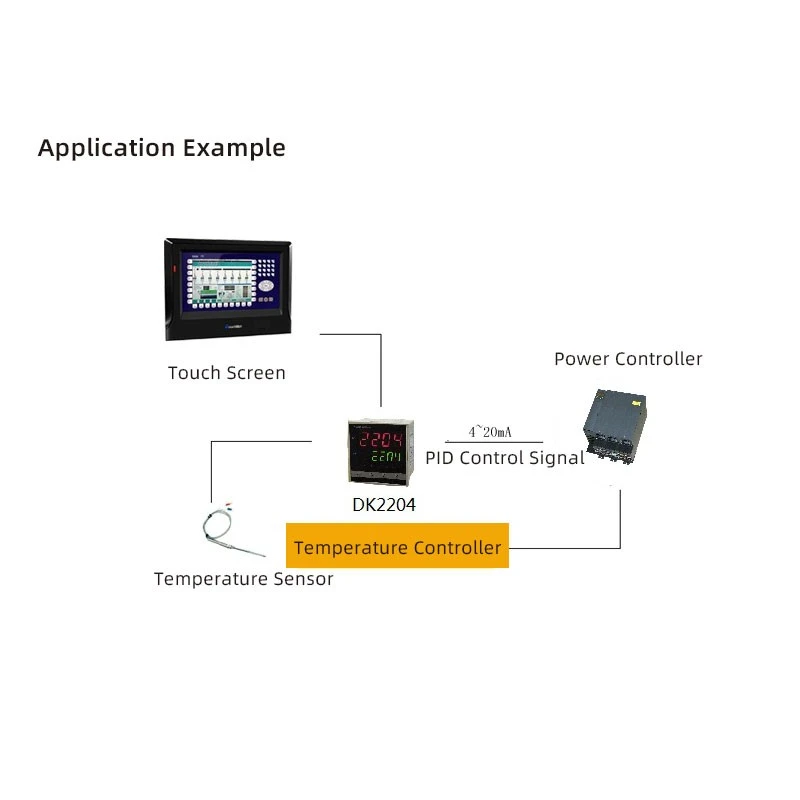
A 4 - Loop Temperature Inspecting Instrument is mainly used for monitoring and inspecting the temperature of four loops. Its power consumption may be different from a Dual - Loop PID Temperature Controller depending on its functionality. If it is only used for monitoring and does not have active control functions, its power consumption may be relatively low. However, if it has additional features such as data logging and communication, the power consumption may increase.
Constant Temperature PID Temperature Controller
A Constant Temperature PID Temperature Controller is designed to maintain a constant temperature. Its power consumption is similar to a Dual - Loop PID Temperature Controller in terms of the basic operating principles. However, the specific power consumption may vary depending on the design and the load requirements.
6. Conclusion and Call to Action
In conclusion, the power consumption of a Dual - Loop PID Temperature Controller is influenced by various factors, including the components used, operating modes, external factors, and load characteristics. By understanding these factors, customers can make more informed decisions when choosing a temperature controller and can implement energy - saving measures to reduce operational costs.
If you are interested in learning more about our Dual - Loop PID Temperature Controllers or have any questions about power consumption, please feel free to contact us for a detailed discussion. We are committed to providing high - quality temperature control solutions that meet your specific needs and offer excellent energy efficiency.
References
- "PID Control Theory and Practice" by John A. D'Azzo and Constantine H. Houpis
- "Energy - Efficient Design of Electronic Systems" by Jan M. Rabaey, Anantha Chandrakasan, and Borivoje Nikolic