

Hey there! As a supplier of Temperature Signal Conversion Transmitters, I often get asked about the difference between a Temperature Signal Conversion Transmitter and a temperature sensor. So, let's dive right in and clear up the confusion.
What's a Temperature Sensor?
First off, a temperature sensor is like the front - line soldier in the battle of temperature measurement. It's a device that directly interacts with the environment to detect temperature. There are different types of temperature sensors out there.
One of the most common types is the thermocouple. Thermocouples work based on the Seebeck effect. When two different metals are joined at two junctions and there's a temperature difference between these junctions, a voltage is generated. This voltage is proportional to the temperature difference, and by measuring this voltage, we can figure out the temperature.
Another popular type is the resistance temperature detector (RTD). RTDs rely on the fact that the electrical resistance of a metal changes with temperature. Usually made of platinum, as the temperature goes up, the resistance of the RTD also increases. By measuring this change in resistance, we can determine the temperature.
In simple terms, a temperature sensor's main job is to sense the temperature and convert it into an electrical signal. But here's the thing: this electrical signal might not be in a form that can be easily used by other parts of a system. That's where the Temperature Signal Conversion Transmitter comes in.
What's a Temperature Signal Conversion Transmitter?
A Temperature Signal Conversion Transmitter takes the electrical signal from the temperature sensor and does some magic. It converts that raw signal into a standardized signal that can be easily understood and used by other devices in a control or monitoring system.
Let's say you have a thermocouple that gives you a small voltage signal. This voltage might vary depending on the type of thermocouple and the temperature range. The Temperature Signal Conversion Transmitter will take this variable voltage and convert it into a more standard signal, like a 4 - 20 mA current signal or a 0 - 10 V voltage signal.
These standardized signals are much easier to transmit over long distances without losing much accuracy. They're also compatible with a wide range of control systems, data loggers, and other equipment. So, in a way, the Temperature Signal Conversion Transmitter acts as a translator between the temperature sensor and the rest of the system.
Key Differences
Function
The main difference in function is that the temperature sensor is all about detecting the temperature and generating an initial electrical signal. On the other hand, the Temperature Signal Conversion Transmitter is focused on taking that initial signal and making it useful for other parts of the system.
Output
The output of a temperature sensor is often a raw, variable signal that is specific to the type of sensor. For example, a thermocouple might output a few millivolts, and the value can change depending on the temperature range and the type of thermocouple used. In contrast, the Temperature Signal Conversion Transmitter outputs a standardized signal, such as the 4 - 20 mA or 0 - 10 V mentioned earlier.
Location
Temperature sensors are usually placed right at the point where the temperature needs to be measured. They need to be in direct contact with the medium (like air, liquid, or solid) whose temperature is being monitored. Temperature Signal Conversion Transmitters, however, can be located a bit further away. They can be placed in a control cabinet or a more convenient location as long as they can receive the signal from the temperature sensor.
Why You Need Both
You might be wondering, why do I need both a temperature sensor and a Temperature Signal Conversion Transmitter? Well, think of it this way. The temperature sensor is like your eyes, it sees the temperature. But the Temperature Signal Conversion Transmitter is like your voice, it communicates that temperature information in a way that other devices can understand.

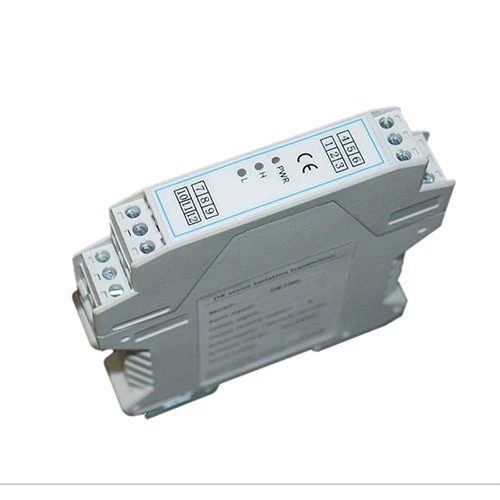
In industrial applications, accurate temperature measurement is crucial. Whether it's in a chemical plant, a food processing facility, or a power generation plant, having the right temperature readings can mean the difference between a smooth operation and a costly breakdown. The temperature sensor provides the accurate temperature data, and the Temperature Signal Conversion Transmitter ensures that this data can be used effectively by the control and monitoring systems.
Our Products
As a supplier of Temperature Signal Conversion Transmitters, we offer a wide range of high - quality products. For example, we have the AC/DC Voltage Current Power Isolation Transmitter. This transmitter is great for isolating and converting signals, ensuring that the data is transmitted accurately and safely.
We also have the Wre5 - wre26 Signal Isolation and Transmission Device. It's designed to handle specific types of signals and provide reliable isolation, which is important in many industrial settings.
And if you need a dual - channel option, our 0 - 10ma Dual - Channel Analog Signal Transmitter is a great choice. It can handle two channels of signals simultaneously, giving you more flexibility in your temperature monitoring system.
Conclusion
In conclusion, while temperature sensors and Temperature Signal Conversion Transmitters are related, they serve different but equally important functions. The temperature sensor is the starting point, detecting the temperature and generating an initial signal. The Temperature Signal Conversion Transmitter then takes that signal and makes it usable for the rest of the system.
If you're in the market for a Temperature Signal Conversion Transmitter or have any questions about temperature measurement and signal conversion, don't hesitate to reach out. We're here to help you find the right solution for your needs. Whether you're setting up a new system or upgrading an existing one, our products can provide the accuracy and reliability you need.
References
- "Temperature Measurement Handbook" by John Doe
- "Industrial Instrumentation and Control" by Jane Smith