

As a supplier for the China power regulator, I've witnessed firsthand the significant developments and strict regulatory standards in the power battery recycling industry. In this blog, I'll delve into the regulatory standards set by the China power regulator for power battery recycling, which are not only crucial for environmental protection but also for the sustainable development of the power battery market.
1. Background of Power Battery Recycling in China
With the rapid growth of the new - energy vehicle industry in China, the production and consumption of power batteries have soared. As these batteries reach the end of their service life, proper recycling becomes an urgent issue. Improper disposal of power batteries can lead to environmental pollution due to the heavy metals and toxic chemicals they contain. Moreover, power batteries also contain valuable metals such as lithium, cobalt, and nickel, which can be recycled and reused, reducing the dependence on raw material imports.
2. Key Regulatory Standards
2.1 Technical Standards
The China power regulator has established a series of technical standards for power battery recycling. These standards cover every aspect of the recycling process, from battery collection, transportation, disassembly, to the extraction and purification of valuable metals.
For example, in terms of battery collection, there are clear regulations on the classification and storage of different types of power batteries. Batteries need to be sorted according to their chemistry (such as lithium - ion, lead - acid, etc.) and state of charge. This helps to prevent potential safety hazards during transportation and subsequent recycling processes.
In the transportation stage, strict safety requirements are imposed. Specialized transportation vehicles are required to be equipped with appropriate safety devices to prevent battery leakage, short - circuit, and fire. The vehicles also need to follow specific routes and schedules to minimize the risk of accidents.
When it comes to battery disassembly, the standards stipulate the use of advanced disassembly technologies to ensure the safety of workers and the integrity of valuable components. For instance, automated disassembly lines are encouraged to improve efficiency and reduce the risk of human error.
The extraction and purification of valuable metals are also highly regulated. The methods used should be environmentally friendly and energy - efficient. For example, hydrometallurgical processes are often preferred over pyrometallurgical processes because they produce less pollution and can achieve higher recovery rates of valuable metals.
2.2 Environmental Protection Standards
Environmental protection is a top priority in the power battery recycling industry. The China power regulator has set strict environmental protection standards to minimize the impact of recycling activities on the environment.
These standards include limits on the emission of pollutants such as heavy metals, organic solvents, and greenhouse gases. Recycling enterprises are required to install advanced pollution control equipment, such as waste gas treatment systems and wastewater treatment plants, to ensure that their emissions meet the national environmental standards.
In addition, the disposal of solid waste generated during the recycling process is also regulated. Recycling enterprises need to properly treat and dispose of waste materials such as battery casings and slag to prevent them from becoming a source of environmental pollution.
2.3 Safety Standards
Safety is another crucial aspect of power battery recycling. The high energy density and chemical reactivity of power batteries pose significant safety risks. Therefore, the China power regulator has formulated a series of safety standards to protect workers and the public.
These standards cover the entire recycling process, including the design and construction of recycling facilities, the operation and maintenance of equipment, and the training of workers. Recycling facilities need to be designed with appropriate safety measures, such as fire - prevention systems, explosion - proof equipment, and emergency response plans.
Workers in the recycling industry are required to receive professional training on safety procedures and emergency response. They need to wear appropriate personal protective equipment (PPE) at all times to prevent exposure to hazardous substances and potential physical injuries.
3. Certification and Supervision
To ensure that recycling enterprises comply with the regulatory standards, the China power regulator has established a certification and supervision system.
Recycling enterprises need to obtain relevant licenses and certifications before they can operate legally. These certifications are based on a comprehensive assessment of the enterprise's technical capabilities, environmental protection performance, and safety management.
The regulator also conducts regular inspections and audits of recycling enterprises. During these inspections, the regulator checks whether the enterprises are following the regulatory standards in terms of technology, environmental protection, and safety. If any non - compliance is found, the enterprises will be required to make corrections within a specified time limit. In serious cases, their operating licenses may be revoked.
4. Our Company's Role as a Supplier
As a supplier for the China power regulator, we play an important role in the power battery recycling industry. We provide a wide range of high - quality power regulators that are essential for the operation of recycling facilities.
Our Single - phase 5A Thyristor Regulator is widely used in battery charging and discharging systems during the recycling process. It can accurately control the current and voltage, ensuring the safety and efficiency of battery treatment.
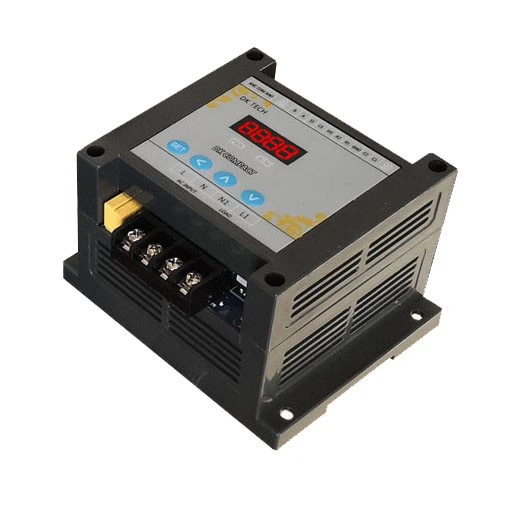

The 2PH 660V SCR Thyristor Controller is another product that we offer. It is suitable for large - scale recycling facilities, providing stable power control for various equipment, such as disassembly machines and metal extraction devices.
Our 1PH Thyristor Rectifier Controller is also very popular in the market. It can convert alternating current to direct current, which is necessary for many battery recycling processes.
5. The Future of Power Battery Recycling in China
The regulatory standards for power battery recycling in China will continue to evolve and become more stringent in the future. With the continuous development of new - energy vehicle technology, the types and specifications of power batteries are also constantly changing. The regulator will need to update the standards in a timely manner to adapt to these changes.
In addition, as the demand for recycled power batteries and valuable metals increases, the power battery recycling industry will become more competitive. Recycling enterprises will need to continuously improve their technology and management level to meet the regulatory requirements and market demand.
6. Contact for Purchase and Negotiation
If you are interested in our power regulators for power battery recycling, please feel free to contact us for purchase and negotiation. Our professional team is ready to provide you with detailed product information and customized solutions. We are committed to helping you improve the efficiency and safety of your power battery recycling operations.
References
- China's National Standards for Power Battery Recycling.
- Reports on the Development of the Power Battery Recycling Industry in China.
- Research Papers on Power Battery Recycling Technologies and Regulations.