

Hey there! As a supplier of Dual - Loop PID Temperature Controllers, I'm super stoked to dive into the topic of the communication interfaces available in these nifty devices.
First off, let's talk about why communication interfaces matter in a Dual - Loop PID Temperature Controller. These controllers are used in a wide range of applications, from industrial manufacturing to scientific research. Having the right communication interfaces allows them to integrate seamlessly with other systems, share data, and be controlled remotely. It's like the controller's way of chatting with the rest of the equipment in the setup.
One of the most common communication interfaces you'll find in Dual - Loop PID Temperature Controllers is the RS - 232 interface. RS - 232 has been around for ages, and it's still a popular choice because it's simple and reliable. It uses a serial communication protocol, which means data is sent one bit at a time. This interface is great for connecting the controller to a computer or a terminal. You can use it to configure the controller settings, read temperature data, and even send commands to adjust the temperature control parameters. For example, if you're running a small - scale lab experiment, you can use an RS - 232 connection to monitor the temperature in real - time and make quick adjustments as needed.
Another widely used interface is RS - 485. RS - 485 is an improvement over RS - 232 in terms of distance and the number of devices that can be connected. It uses a differential signaling method, which makes it more resistant to noise and interference. This is especially important in industrial environments where there's a lot of electrical noise. With RS - 485, you can connect multiple Dual - Loop PID Temperature Controllers in a network, allowing you to control and monitor them all from a single central location. For instance, in a large manufacturing plant with multiple temperature - controlled zones, an RS - 485 network can be set up to manage all the controllers efficiently.
Ethernet is also becoming increasingly popular as a communication interface for Dual - Loop PID Temperature Controllers. With an Ethernet interface, the controller can be connected to a local area network (LAN) or even the internet. This opens up a whole new world of possibilities. You can access the controller from anywhere in the world using a web browser or a dedicated software application. It's great for remote monitoring and control. For example, if you have a temperature - sensitive process running in a facility located in another city, you can keep an eye on the temperature and make adjustments without having to be physically present. You can also integrate the controller with other smart devices and systems in an Internet of Things (IoT) setup.
Modbus is a communication protocol that is often used in conjunction with these physical interfaces. Modbus is an open - source protocol that allows different devices to communicate with each other. It's widely supported by many industrial devices, including Dual - Loop PID Temperature Controllers. With Modbus, you can easily read and write data to the controller's registers. This means you can access temperature readings, setpoint values, and other control parameters. It simplifies the integration of the controller into existing industrial control systems.

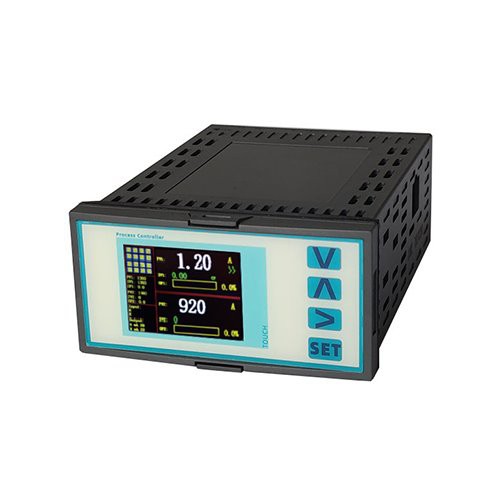
Now, let's take a look at some specific products that utilize these communication interfaces. The PWM Output Temperature Controller is a great example. It comes with multiple communication options, including RS - 232 and RS - 485. This allows you to connect it to different types of systems and control the temperature using pulse - width modulation. The Dual - Loop Controller Of Carbon Potential and Temperature is another interesting product. It not only controls temperature but also carbon potential, and it has Ethernet and Modbus capabilities, enabling seamless integration into modern industrial networks. And if you're looking for a multi - loop solution, the Multi - Loop On - Off Controller offers flexible communication interfaces to manage multiple temperature loops effectively.
When choosing a Dual - Loop PID Temperature Controller, it's important to consider the communication interfaces based on your specific needs. If you're working in a small - scale setup, an RS - 232 interface might be sufficient. But if you're dealing with a large industrial plant or need remote access, Ethernet and Modbus could be the way to go.
We understand that every customer's requirements are unique. That's why we offer a wide range of Dual - Loop PID Temperature Controllers with different communication interfaces. Whether you're a researcher looking for precise temperature control in a lab or an industrial engineer managing a complex manufacturing process, we've got the right controller for you.
If you're interested in learning more about our Dual - Loop PID Temperature Controllers or have any questions about the communication interfaces, don't hesitate to reach out. We're here to help you find the perfect solution for your temperature control needs. Let's start a conversation and see how we can work together to make your temperature - related processes more efficient and reliable.
References
- Industrial Communication Handbook: Principles, Technology, and Applications by Hartmut Ziegler
- Modbus Protocol Specification by Schneider Electric