

In the realm of industrial automation and control systems, isolation transmitters play a crucial role in ensuring accurate signal transmission while providing electrical isolation between input and output circuits. However, these devices often operate in harsh environments where they are exposed to shocks and vibrations. Ensuring the shock and vibration resistance of isolation transmitters is essential for maintaining their performance, reliability, and longevity. As an experienced isolation transmitter supplier, we understand the challenges associated with shock and vibration and have developed effective strategies to address them.
Understanding the Impact of Shock and Vibration on Isolation Transmitters
Shock and vibration can have a significant impact on the performance and reliability of isolation transmitters. When subjected to sudden shocks or continuous vibrations, the internal components of the transmitter can be damaged, leading to signal distortion, inaccurate measurement, or complete failure. Some of the common issues caused by shock and vibration include:
- Component Failure: Shocks and vibrations can cause mechanical stress on the internal components of the isolation transmitter, such as resistors, capacitors, and integrated circuits. Over time, this stress can lead to component failure, resulting in signal loss or incorrect output.
- Solder Joint Damage: The solder joints that connect the components to the printed circuit board (PCB) are particularly vulnerable to shock and vibration. Repeated stress can cause the solder joints to crack or break, leading to intermittent connections or complete circuit failure.
- Signal Interference: Shock and vibration can cause the internal wiring of the isolation transmitter to move or vibrate, resulting in signal interference. This interference can manifest as noise in the output signal, which can affect the accuracy of the measurement.
- Mechanical Damage: In extreme cases, shock and vibration can cause physical damage to the enclosure of the isolation transmitter, exposing the internal components to environmental factors such as dust, moisture, and temperature variations. This can further degrade the performance and reliability of the device.
Design Considerations for Shock and Vibration Resistance
To ensure the shock and vibration resistance of isolation transmitters, it is essential to consider these factors during the design phase. Here are some key design considerations:

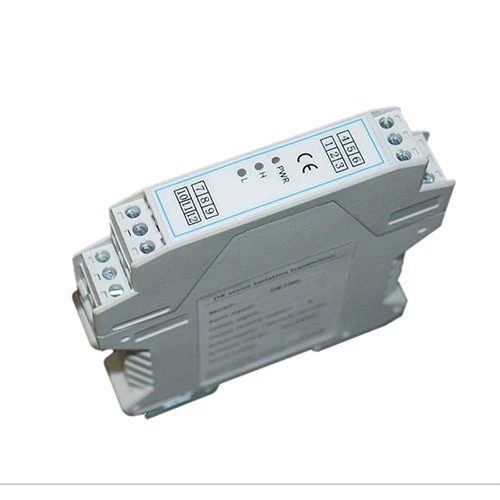
- Robust Enclosure Design: The enclosure of the isolation transmitter should be designed to provide mechanical protection to the internal components. It should be made of a sturdy material, such as metal or high-strength plastic, and have a rigid structure. The enclosure should also be designed to prevent the ingress of dust, moisture, and other contaminants, which can cause damage to the internal components.
- Component Selection: Choosing high-quality components that are resistant to shock and vibration is crucial. Components should be selected based on their mechanical properties, such as their ability to withstand stress and vibration. For example, surface mount components are generally more resistant to shock and vibration than through-hole components.
- PCB Design: The printed circuit board (PCB) design plays a critical role in the shock and vibration resistance of the isolation transmitter. The PCB should be designed to minimize the stress on the components and solder joints. This can be achieved by using a rigid PCB material, providing adequate support for the components, and using appropriate trace widths and spacing.
- Mounting and Fixing: Proper mounting and fixing of the isolation transmitter are essential to prevent movement and vibration. The transmitter should be mounted securely to a stable surface using appropriate mounting hardware. Rubber or silicone gaskets can be used to absorb vibrations and reduce the stress on the device.
Manufacturing and Testing Processes
In addition to design considerations, the manufacturing and testing processes also play a crucial role in ensuring the shock and vibration resistance of isolation transmitters. Here are some key processes:
- Quality Manufacturing: The manufacturing process should be carefully controlled to ensure the quality and reliability of the isolation transmitter. This includes using high-quality materials, following strict manufacturing standards, and conducting thorough inspections at each stage of the production process.
- Vibration and Shock Testing: Isolation transmitters should be subjected to rigorous vibration and shock testing to ensure their performance and reliability under real-world conditions. These tests can simulate the shocks and vibrations that the transmitter may encounter during transportation, installation, and operation.
- Environmental Testing: In addition to vibration and shock testing, isolation transmitters should also be subjected to environmental testing, such as temperature, humidity, and dust testing. This can help to ensure that the transmitter can operate reliably in a wide range of environmental conditions.
Our Solutions for Shock and Vibration Resistance
As a leading isolation transmitter supplier, we have developed a range of products and solutions to ensure the shock and vibration resistance of our isolation transmitters. Our products are designed and manufactured using the latest technologies and materials to provide maximum performance and reliability. Here are some of our key solutions:
- Robust Enclosure Design: Our isolation transmitters are housed in a rugged enclosure that provides mechanical protection to the internal components. The enclosure is made of a high-strength plastic or metal material and has a rigid structure to withstand shocks and vibrations.
- High-Quality Components: We use only high-quality components in our isolation transmitters to ensure their reliability and performance. Our components are carefully selected based on their mechanical properties and are tested to ensure their resistance to shock and vibration.
- Advanced PCB Design: Our printed circuit board (PCB) design is optimized to minimize the stress on the components and solder joints. We use a rigid PCB material and provide adequate support for the components to prevent movement and vibration.
- Rigorous Testing: All our isolation transmitters are subjected to rigorous vibration and shock testing to ensure their performance and reliability under real-world conditions. We also conduct environmental testing to ensure that our transmitters can operate reliably in a wide range of environmental conditions.
Our Product Range
We offer a wide range of isolation transmitters to meet the diverse needs of our customers. Some of our popular products include:
- AC/DC Voltage Current Power Isolation Transmitter: This transmitter is designed to provide electrical isolation between AC/DC voltage, current, and power signals. It is suitable for use in a wide range of industrial applications, such as power monitoring, control systems, and automation.
- Wre5-wre26 Signal Isolation and Transmission Device: This device is designed to isolate and transmit signals from thermocouples and other sensors. It is suitable for use in temperature measurement and control applications in industries such as metallurgy, chemical, and textile.
- PT100 Resistance Signal Isolation Transmitter: This transmitter is designed to convert the resistance signal from a PT100 sensor into a standard current or voltage signal. It is suitable for use in temperature measurement and control applications in a wide range of industries.
Conclusion
Ensuring the shock and vibration resistance of isolation transmitters is essential for maintaining their performance, reliability, and longevity. As an experienced isolation transmitter supplier, we understand the challenges associated with shock and vibration and have developed effective strategies to address them. Our products are designed and manufactured using the latest technologies and materials to provide maximum performance and reliability. If you are looking for high-quality isolation transmitters that can withstand shocks and vibrations, please contact us to discuss your specific requirements. Our team of experts will be happy to assist you in finding the right solution for your application.
References
- Grob, Bernard. Electronic Instrumentation and Measurement Techniques. McGraw-Hill, 2006.
- Dorf, Richard C., and Electric Engineering Handbook. CRC Press, 2005.
- Horowitz, Paul, and Winfield Hill. The Art of Electronics. Cambridge University Press, 2015.