

In the field of industrial data acquisition, the Universal Input RTU Acquisition Module is a critical component. As a supplier of the Universal Input RTU Acquisition Module, I've witnessed firsthand the challenges that noise interference can pose to its performance. Understanding how this module handles noise interference is crucial for ensuring accurate and reliable data acquisition.
Sources of Noise Interference
Before diving into how the Universal Input RTU Acquisition Module deals with noise, it's essential to understand the common sources of noise interference. Electrical noise can stem from various factors, including electromagnetic fields generated by nearby electrical equipment, power line fluctuations, and radio frequency interference (RFI). These forms of noise can corrupt the signals being acquired by the module, leading to inaccurate data readings and potentially compromising the integrity of the entire system.
Electromagnetic interference (EMI) is perhaps one of the most prevalent types of noise in industrial environments. Motors, generators, and other high-power electrical devices emit strong electromagnetic fields that can easily couple into the signal lines of the acquisition module. This can cause unwanted fluctuations in the acquired signals, making it difficult to distinguish between the actual data and the noise.
Power line noise is another significant concern. Voltage spikes, sags, and harmonics in the power supply can introduce unwanted noise into the system. These fluctuations can be caused by factors such as lightning strikes, switching operations in the power grid, or the operation of large electrical loads. If not properly addressed, power line noise can disrupt the normal operation of the acquisition module and lead to inaccurate data acquisition.
RFI is also a common issue, especially in environments with a high density of wireless communication devices or other sources of radio frequency emissions. Radio waves can interfere with the electrical signals in the acquisition module, causing signal distortion and data errors.
Noise Handling Techniques in the Universal Input RTU Acquisition Module
Our Universal Input RTU Acquisition Module Universal Input RTU Acquisition Module is designed with several advanced techniques to handle noise interference effectively.
Filtering
One of the most fundamental ways to deal with noise is through filtering. The module is equipped with both hardware and software filters. Hardware filters, such as low - pass filters, are used to block high - frequency noise components from entering the module. These filters are typically implemented using passive components such as resistors, capacitors, and inductors. By attenuating high - frequency signals, the low - pass filters ensure that only the desired signal frequencies are passed through to the analog - to - digital converter (ADC) for processing.
Software filters, on the other hand, are implemented in the module's firmware. Digital filtering algorithms, such as the moving average filter and the median filter, are used to further reduce noise in the acquired data. The moving average filter calculates the average value of a set of consecutive data points, which helps to smooth out random noise fluctuations. The median filter, on the other hand, replaces each data point with the median value of a neighboring set of data points, which is effective in removing impulse noise.
Shielding
Shielding is another important technique used to protect the module from electromagnetic interference. The enclosure of the Universal Input RTU Acquisition Module is made of a conductive material, such as metal, which acts as a Faraday cage. This cage blocks external electromagnetic fields from penetrating the module and interfering with its internal components. Additionally, the signal cables used to connect the module to the sensors are also shielded. The shielding layer of the cables is grounded, which helps to divert any induced electromagnetic currents away from the signal conductors.
Isolation
Isolation is crucial for preventing noise from being transferred between different parts of the system. The Universal Input RTU Acquisition Module uses isolation techniques, such as opto - isolation and transformer isolation, to separate the input and output circuits from the power supply and other external sources of noise. Opto - isolation uses light - emitting diodes (LEDs) and photodetectors to transfer signals between circuits without any direct electrical connection. This effectively blocks the transfer of electrical noise between the input and output circuits. Transformer isolation, on the other hand, uses transformers to transfer electrical power and signals between circuits while providing electrical isolation.
Error Detection and Correction
In addition to the above techniques, the Universal Input RTU Acquisition Module also incorporates error detection and correction mechanisms. The module uses checksums and parity bits to detect errors in the acquired data. If an error is detected, the module can request re - transmission of the data or use error correction algorithms to reconstruct the original data.
Real - World Applications and Performance
The effectiveness of the noise handling techniques in the Universal Input RTU Acquisition Module can be seen in various real - world applications. In industrial automation systems, where accurate data acquisition is essential for process control, the module has been able to provide reliable and accurate data even in noisy environments.
For example, in a manufacturing plant with numerous motors and other high - power electrical equipment, the Universal Input RTU Acquisition Module is used to monitor the temperature, pressure, and flow rate of various processes. Despite the presence of strong electromagnetic interference from the equipment, the module is able to acquire accurate data thanks to its advanced noise handling techniques.
In power distribution systems, the module is used to monitor the voltage, current, and power factor of the electrical lines. Power line noise, such as voltage spikes and harmonics, can easily corrupt the acquired data. However, the module's filtering, isolation, and error detection mechanisms ensure that the data remains accurate and reliable, allowing for effective power management and fault detection.
Complementary Products and Their Role in Noise Reduction
Our product portfolio also includes other modules that can work in conjunction with the Universal Input RTU Acquisition Module to further enhance noise reduction. The AC Voltage Or Current True RMS Transmitter AC Voltage Or Current True RMS Transmitter is designed to accurately measure AC voltage and current in noisy environments. It uses advanced signal processing techniques to filter out noise and provide true RMS values, which are essential for accurate power calculations.
The Switching Pulse Counting Acquisition and Transmission Module Switching Pulse Counting Acquisition and Transmission Module is another complementary product. In applications where pulse signals need to be counted, such as in flow meters and encoders, this module can accurately count the pulses even in the presence of noise. It uses filtering and anti - bounce techniques to ensure that only valid pulses are counted.
Conclusion and Call to Action
In conclusion, the Universal Input RTU Acquisition Module is a highly reliable solution for industrial data acquisition, especially in noisy environments. Its advanced noise handling techniques, including filtering, shielding, isolation, and error detection and correction, ensure that accurate and reliable data can be acquired even in the face of challenging noise conditions.
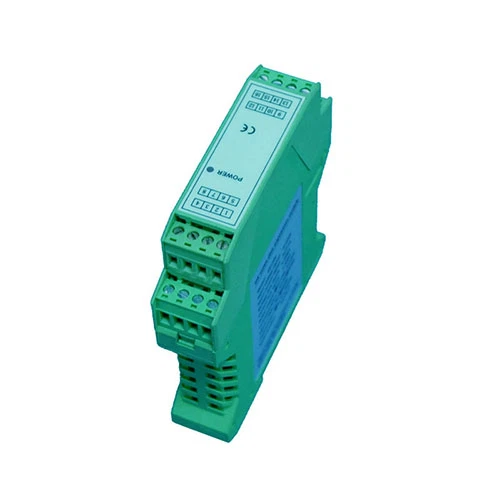

If you are in need of a high - quality data acquisition solution that can effectively handle noise interference, I encourage you to explore our Universal Input RTU Acquisition Module and its complementary products. We are committed to providing you with the best products and support to meet your specific needs. Contact us today to discuss your requirements and explore how our products can benefit your operations.
References
- "Electromagnetic Compatibility Engineering" by Henry W. Ott
- "Digital Signal Processing: Principles, Algorithms, and Applications" by John G. Proakis and Dimitris G. Manolakis
- Technical documentation of the Universal Input RTU Acquisition Module, AC Voltage Or Current True RMS Transmitter, and Switching Pulse Counting Acquisition and Transmission Module.