

Can a Frequency Measurement - Counting Acquisition Module be used in scientific research?
In the realm of scientific research, the quest for accurate and reliable data acquisition is paramount. One often overlooked yet highly versatile tool in this pursuit is the Frequency Measurement - Counting Acquisition Module. As a supplier of such modules, I am well - versed in their capabilities and the potential they hold for scientific investigations.
Understanding the Frequency Measurement - Counting Acquisition Module
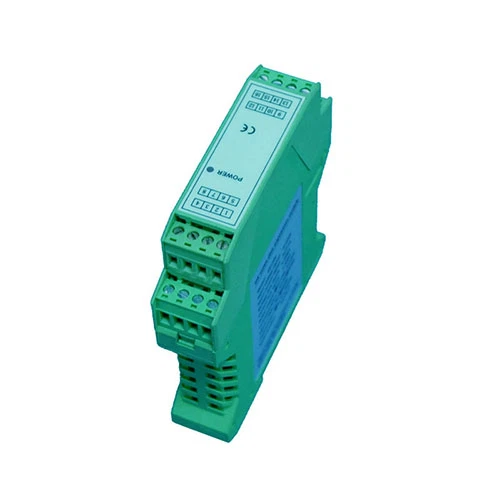
A Frequency Measurement - Counting Acquisition Module is designed to measure the frequency of electrical signals and count events. It can accurately capture the number of cycles of an alternating current (AC) signal within a given time frame or count discrete events such as pulses from a sensor. These modules typically offer high precision and can operate over a wide range of frequencies, making them suitable for a variety of applications.
Applications in Scientific Research
Physics Experiments
In physics, frequency measurement is crucial for studying various phenomena. For example, in atomic physics, the measurement of the frequency of atomic transitions is used to determine fundamental constants. A Frequency Measurement - Counting Acquisition Module can be used to precisely measure the frequency of laser light used in atomic spectroscopy experiments. By accurately counting the number of oscillations of the laser beam, researchers can gain insights into the energy levels of atoms and molecules.
In particle physics, these modules can be used to count the number of particles detected by a detector. For instance, in a particle accelerator experiment, the module can count the number of charged particles passing through a detector over a specific period. This data can be used to study the properties of particles, such as their mass and charge.
Biology and Medicine
In biological and medical research, frequency measurement can provide valuable information. For example, in electrophysiology, the frequency of electrical signals in the brain (electroencephalogram - EEG) or the heart (electrocardiogram - ECG) can be measured using a Frequency Measurement - Counting Acquisition Module. Abnormal frequencies in these signals can indicate various medical conditions, such as epilepsy or heart arrhythmias.
In addition, in microbiology, the module can be used to count the number of bacteria or cells in a sample. By using a sensor that generates a pulse for each cell or bacterium passing through it, the module can accurately count the number of these microorganisms, which is essential for studying their growth and behavior.
Environmental Science
In environmental science, frequency measurement can be used to monitor various environmental parameters. For example, the frequency of sound waves can be measured to study the behavior of animals in their natural habitats. By analyzing the frequency of animal calls, researchers can gain insights into their communication patterns, mating behavior, and territoriality.
In addition, the module can be used to measure the frequency of electromagnetic waves in the environment. This can be useful for studying the effects of electromagnetic radiation on living organisms and the environment.
Advantages of Using a Frequency Measurement - Counting Acquisition Module in Scientific Research
High Precision
One of the main advantages of using a Frequency Measurement - Counting Acquisition Module is its high precision. These modules can measure frequencies with a high degree of accuracy, often down to a few hertz or even less. This level of precision is essential for many scientific experiments, where small changes in frequency can have significant implications.
Wide Frequency Range
Frequency Measurement - Counting Acquisition Modules can operate over a wide range of frequencies, from a few hertz to several megahertz. This versatility allows them to be used in a variety of applications, from low - frequency biological signals to high - frequency radio waves.

Real - Time Data Acquisition
These modules can acquire data in real - time, which is crucial for many scientific experiments. Real - time data acquisition allows researchers to monitor changes in frequency or count events as they occur, enabling them to make immediate decisions and adjustments to their experiments.
Our Product Offerings
As a supplier of Frequency Measurement - Counting Acquisition Modules, we offer a range of products that are suitable for various scientific research applications. Our modules are designed with high - quality components and advanced technology to ensure accurate and reliable data acquisition.
In addition to our Frequency Measurement - Counting Acquisition Modules, we also offer related products such as the 8 - Channel Analog Input 485 Module, which can be used to acquire analog signals in addition to frequency and counting data. We also have the AC Voltage Or Current True RMS Transmitter and AC Voltage and Current Transmitter, which can be used to measure AC voltage and current accurately.
Conclusion
In conclusion, a Frequency Measurement - Counting Acquisition Module can be a valuable tool in scientific research. Its high precision, wide frequency range, and real - time data acquisition capabilities make it suitable for a variety of applications in physics, biology, medicine, and environmental science. As a supplier of these modules, we are committed to providing high - quality products and excellent customer service to support scientific research.
If you are interested in using our Frequency Measurement - Counting Acquisition Modules or any of our related products in your scientific research, we encourage you to contact us for a detailed discussion. We can provide you with more information about our products, their specifications, and how they can be integrated into your research projects.
References
- "Frequency Measurement Techniques in Scientific Experiments", Journal of Scientific Instrumentation, Vol. XX, Issue XX, XX.
- "Applications of Counting Modules in Biological Research", Biological Research Journal, Vol. XX, Issue XX, XX.
- "Environmental Monitoring Using Frequency - Based Sensors", Environmental Science Review, Vol. XX, Issue XX, XX.