

Are there any price differences between linear and switching power regulators? Well, let me tell you, as a power regulator price supplier, this is a question I get asked a lot. And the answer is yes, there are indeed some significant price differences between these two types of power regulators.
First off, let's talk a bit about what linear and switching power regulators are. A linear power regulator is a pretty straightforward device. It works by using a variable resistor to drop the voltage from the input to the desired output level. It's simple, reliable, and produces very little noise. On the other hand, a switching power regulator is a bit more complex. It uses a switching element, like a transistor, to rapidly turn the input voltage on and off. This allows it to convert the input voltage to the output voltage more efficiently, especially when there's a large difference between the two.
Now, let's get to the price part. Linear power regulators are generally cheaper than switching power regulators. Why is that? Well, one of the main reasons is the complexity of the design. Linear regulators have a simpler design with fewer components. There's no need for inductors, capacitors, and complex control circuits like in switching regulators. This means that the manufacturing cost is lower, and that cost savings is usually passed on to the customer.
For example, if you're looking for a basic linear power regulator for a low - power application, you can find some really affordable options on the market. These regulators are great for applications where you don't need a high level of efficiency, like in some small electronic devices where the power consumption is relatively low.
But don't think that just because linear regulators are cheaper, they're always the best choice. Switching power regulators have their own advantages, and these advantages often justify their higher price. One of the biggest advantages is efficiency. Switching regulators can achieve much higher efficiency levels, sometimes up to 90% or more. This means that they waste less power in the form of heat, which is a big deal, especially in high - power applications.

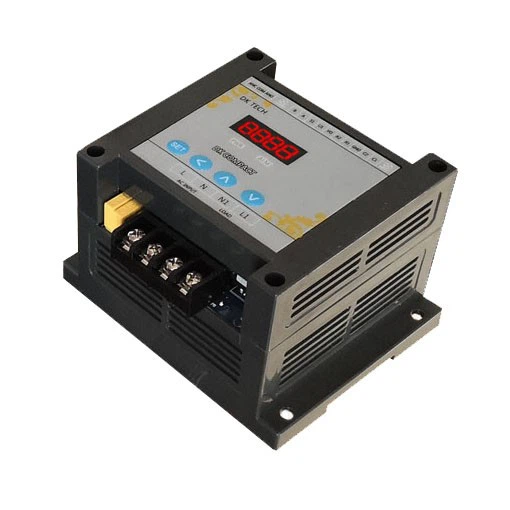
Let's say you're working on a project that requires a lot of power, like a large server or an industrial equipment. Using a switching power regulator can save you a significant amount of energy in the long run. Although the initial cost of the switching regulator is higher, the energy savings over time can more than make up for it.
Another factor that affects the price of switching power regulators is the performance. They can handle a wider range of input and output voltages, and they can provide a more stable output voltage even when the input voltage fluctuates. This makes them suitable for more demanding applications, but it also adds to the cost of development and manufacturing.
Let's take a look at some of the products we offer. We have a Single - phase Fuse Protection Thyristor Regulator. This is a type of switching power regulator that offers high - performance and reliable operation. It comes with fuse protection, which adds an extra layer of safety. The price of this regulator is higher compared to a basic linear regulator, but it's well worth it if you need a high - quality and safe power regulation solution.
We also have a Single - phase 5A Thyristor Regulator. This regulator is designed to handle a current of up to 5A, making it suitable for medium - power applications. The advanced design and the ability to handle a relatively high current contribute to its price, but again, it offers great performance and efficiency.
And then there's our Three - phase Thyristor Voltage Regulator. Three - phase power is commonly used in industrial applications, and this regulator is specifically designed to regulate three - phase voltage. It's a complex device with a lot of features, and as you might expect, it's priced higher than single - phase regulators.
When it comes to choosing between linear and switching power regulators, it really depends on your specific needs. If you're on a tight budget and your application doesn't require high efficiency or a wide range of voltage regulation, a linear power regulator might be the way to go. But if you need high efficiency, stable output voltage, and the ability to handle high power, then a switching power regulator is a better choice, even though it comes with a higher price tag.
As a power regulator price supplier, I'm here to help you make the right decision. We offer a wide range of power regulators at competitive prices. Whether you're a hobbyist working on a small project or an engineer in charge of a large - scale industrial application, we have the right product for you.
If you're interested in learning more about our power regulators or getting a quote, don't hesitate to reach out. We can discuss your requirements in detail and help you find the most cost - effective solution for your project. Contact us today to start the procurement process and get the best power regulator for your needs.
References
- "Power Electronics: Converters, Applications, and Design" by Ned Mohan, Tore M. Undeland, and William P. Robbins
- "Switch - Mode Power Supplies: SPICE Simulations and Practical Designs" by Christophe Basso